


















This year’s theme for CIC’s Institute for Chief Academic Officers is Creating Tomorrow’s Institutions, Together, which will challenge participants to look to the future and radically reimagine higher education through the lens of stewardship, innovation, and cross-functional collaboration. We invite chief academic officers, along with chief advancement, enrollment, financial, and marketing communication officers, to join us as we look to the future and radically reimagine higher education through the lens of stewardship, innovation, and cross-functional collaboration. The overarching question: “What are we doing to make sure our institutions thrive today and 100 years from now?”
What would an independent higher education ecosystem look like if designed today? How can institutions collaborate without losing mission integrity? How do we break down silos between academic affairs, finance, advancement, enrollment, marketing, and other divisions? What role does technology play? How can we together develop a framework when sustainability efforts fail? How can CAOs and other leaders lead ethically through mergers, teach-outs, or closures? These and other questions will inform this year’s programming.
CIC offers special pre-Institute workshops for new chief academic officers and experienced chief academic officers. An addition to this year’s program is a third pre-Institute workshop titled “Aligning Data, Strategy, and Financial Practices to Advance Student Success.” The workshop will utilize the National Association of College and University Business Officers (NACUBO)’s Student Success Hub’s latest toolkit and CIC’s Insights Tool.
Who Should Participate?
This year, the following campus roles are invited to the Institute:
- Chief Academic Officers
- Chief Advancement Officers
- Chief Enrollment Officers
- Chief Finance Officers
- Chief Marketing and Communication Officers
CIC membership is not required for registration; independent college and university administrators are encouraged to participate.
Plenary Speakers and Hosts
-

Jessica Riddell
Professor of Early Modern Literature and Stephen A. Jarislowsky Chair of Undergraduate Teaching Excellence, Bishop’s University (Québec, Canada)
-
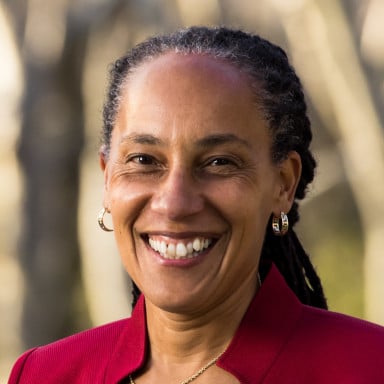
Alexandria Radford
Principal, Sova
-
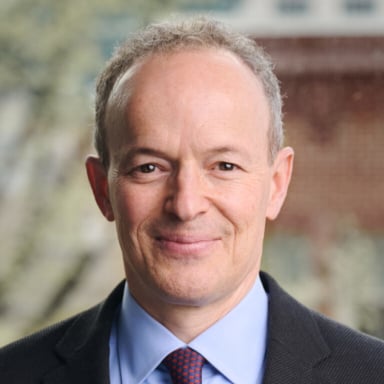
Tim Powers
Vice President for Government Relations and Policy Development, National Association of Independent Colleges and Universities (NAICU)
-
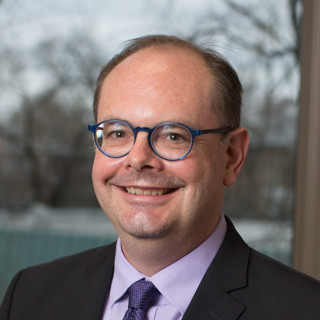
Rachel Bowser
Vice President for Academic Affairs and Dean of the College, Agnes Scott College (GA)
-
John McAllister
Managing Partner, McAllister & Quinn
-
Marjorie Hass
President, Council of Independent Colleges
-
Titilayo Ufomata
Senior Vice President for Academic Programs, Council of Independent Colleges
Seminar Presenters
-
Chad Berry
Vice President for Alumni, Communications and Philanthropy, Berea College (KY)
-
Ellen de Graffenreid
Vice President of Communications and Marketing, Grinnell College (IA)
-
Bradley Fuster
Provost and Vice President for Academic Affairs, San Francisco Bay University (CA)
-
Reyes Gonzalez
Senior Advisor for Partnerships and Mergers, Council of Independent Colleges
-
Melanie Gottlieb
Executive Director, American Association of Collegiate Registrars and Admissions Officers (AACRAO)
-
Raymond R. Kennelly
Senior Vice President and Chief Strategy Officer, Lewis University (IL)
-
Zach Kinzler
Head of Academic Sales Strategies, BoodleBox
-
Karen An-hwei Lee
Provost, Wheaton College (IL)
-
Joel Malina
Partner, Brunswick Group
-
Chinyere Oparah
Founder and Executive Director, Center for Liberated Leadership
-
Gregor Thuswaldner
Vice President for Academic Affairs and Dean of the Faculty, La Roche University (PA)


Plenary Sessions
Hope as Strategic Infrastructure: Rewiring Independent Colleges for Flourishing in an Age of Rupture
Independent colleges and universities find themselves navigating a moment of profound turbulence: demographic shifts, financial pressures, political polarization, technological disruption, declining public trust, and growing questions about the value and purpose of higher education itself. Yet moments of rupture also create opportunities for renewal. The institutions represented by CIC have long served as laboratories of democratic learning, civic leadership, and human flourishing. The question before us is not simply how to survive the next decade, but how to reimagine our institutions so they can thrive into the next century.
Drawing on insights from the Hope Circuits project, which has engaged more than 70 colleges and universities and 50 sector organizations across North America, Jessica Riddell invites participants to move beyond narratives of scarcity, crisis management, and institutional maintenance. Instead, she proposes hope as strategic infrastructure: a practical, collective capacity that enables institutions to imagine, build, and sustain better futures.
Through an ecosystemic lens, this keynote explores how leaders across academic affairs, finance, advancement, enrollment, and communications can work together to cultivate the conditions for flourishing. Participants will be introduced to a framework for understanding institutional ecosystems, identifying the difference between collapse, toxic continuity, repair, integrity, and flourishing, and discerning how their own institutions might move toward greater shared purpose, impact, and collective flourishing.
Blending research, storytelling, and practical examples from across the higher education landscape, this opening keynote will challenge attendees to ask a provocative question: if we were creating our institutions today, what would we build differently? More importantly, how do we honor the people, values, and missions we have inherited while courageously rewiring our colleges and universities for a future that is not yet fully visible? Participants will leave with a shared vocabulary, a renewed sense of possibility, and concrete ideas for leading through uncertainty with imagination, agency, and hope. The future of higher education will not be determined by what happens to us, but by what we choose to cultivate together.
Jessica Riddell, Professor of Early Modern Literature and Stephen A. Jarislowsky Chair of Undergraduate Teaching Excellence, Bishop’s University (Québec, Canada)
Preserving What Matters, Redesigning What Does Not, and Rebuilding for the Students of Today and Tomorrow
Many colleges were designed around assumptions about students, learning, and institutional life that no longer fully match current realities. As demographic shifts, economic pressures, technological developments, and changing student needs and expectations reshape higher education, institutions are being challenged not simply to adapt existing models, but to reconsider more fundamentally what higher education should look like.
In this plenary, Alexandria Radford will explore what it means to redesign institutions around the students of today and tomorrow in ways that stay true to, and even advance, institutions’ missions. Drawing on research and practice, she will discuss how student needs and the broader forces shaping higher education are evolving, as well as what those changes imply for institutional design. She will also introduce a framework and set of guiding questions that institutional leaders in different divisions should be asking now. Attendees will leave with practical tools for identifying which elements of their college remain essential to preserve, which need to be redesigned, and which may need to be built anew to help both students and institutions thrive in the next century and beyond.
Alexandria Radford, Principal, Sova
Aftermath of the 2026 Mid-Term Elections. Where Does Higher Education Go from Here?
As higher education faces elusive expectations and shifting laws, finding direction and forging connections becomes more important than ever.
Moderated by Marjorie Hass, this closing plenary panel convenes policy experts and campus leaders just days after the election to decode what the ever-transforming landscape of congressional dynamics means for independent higher education.
Panelists will explore challenges facing our sector which impact not just higher education but society. How do we obtain and maintain federal government grants while sustaining the vitality of research in independent institutions? Does the analysis of the current regulatory environment herald future challenges or opportunities? What potential scenarios may emerge from changes to the chambers of Congress?
We’ll discuss these questions and more during this candid conversation on the intersection between higher education and governmental regulation. Time will also be included for Q&A.
Rachel Bowser, Vice President for Academic Affairs and Dean of the College, Agnes Scott College (GA)
John McAllister, Managing Partner, McAllister & Quinn
Tim Powers, Vice President for Government Relations and Policy Development, National Association of Independent Colleges and Universities (NAICU)
Moderator: Marjorie Hass, President, Council of Independent Colleges
Interactive Seminars
Advancing Trust, Transparency and Institutional Value: Learning Mobility as Strategy
Public confidence in higher education is shifting at the same time policymakers and accreditors are demanding clearer evidence of outcomes, mobility, and institutional value. Independent and liberal arts institutions are often portrayed as vulnerable in this environment—yet they may be best positioned to lead. Their emphasis on critical inquiry, ethical reasoning, and adaptable thinking aligns directly with the durable skills learners and employers need, even if the sector has not always translated that value in ways the public understands.
This session explores AACRAO’s Learning Mobility framework and strategic pillars as a response to the national call for trust, transparency, and outcomes-based accountability. By moving the conversation from seat time and credit accumulation toward demonstrated learning and transferable competencies, institutions can strengthen learner mobility while reinforcing the foundational role of the liberal arts.
Participants will consider how a shift in narrative—and in practice—can reposition independent colleges not as defenders of a traditional model, but as architects of a more transparent, learner-centered future that advances institutional mission and public value.
Melanie Gottlieb, Executive Director, AACRAO (American Association of Collegiate Registrars and Admissions Officers)
Balancing Mission and Margin: AI-enabled Scenario Planning for Strategic Sustainability
This interactive session guides participants through an AI-powered exercise designed to strengthen conversations among chief academic officers, chief financial officers, and other university leaders. Participants will explore how enrollment, academic programs, financial realities, and mission priorities interact to shape institutional sustainability. Using a practical scenario-planning framework, leaders will examine strategic trade-offs, test possible futures, and identify pathways for mission-aligned resource allocation. The session emphasizes AI as a tool to support, not replace, human judgment. Participants will leave with an adaptable model for fostering transparent, evidence-based dialogue with boards, cabinets, faculty, and other key constituencies.
Karen An-hwei Lee, Provost, Wheaton College (IL)
Bradley Fuster, Provost and Vice President for Academic Affairs, San Francisco Bay University (CA)
Zach Kinzler, Head of Academic Sales Strategies, BoodleBox
Gregor Thuswaldner, Vice President for Academic Affairs and Dean of the Faculty, LaRoche University (PA)
Creating Sustainable Institutions Together: Strategic Collaboration, Partnerships, and the Future of Higher Education
This interactive seminar on strategic leadership explores how mergers, acquisitions, and institutional transformation are reshaping the future of design, sustainability, and the higher-education ecosystem. Grounded in the Institute’s theme, Creating Tomorrow’s Institutions, Together, the seminar positions mergers and acquisitions as a continuum of institutional partnerships, not merely as responses to challenges but as opportunities to strengthen the mission, foster innovation, expand institutional capacity, and build sustainable futures together.
Designed for chief academic, financial, enrollment, advancement, and marketing and communications officers, the seminar emphasizes strategic leadership, cross-functional collaboration, institutional stewardship, and forward-looking thinking. Rather than focusing narrowly on transactions, the seminar explores how institutions can collaborate more intentionally, strategically, and proactively while staying true to their mission and institutional identity.
The seminar is designed to help participants:
- Identify how institutions can collaborate earlier and more intentionally to build sustainable mission-centered futures together
- Better understand the evolving higher education landscape and the rise of strategic collaboration
- Explore the continuum of collaborative models emerging across higher education
- Understand how institutions responsibly and ethically navigate mergers and acquisitions as a continuum of partnerships, affiliations, closures, and institutional transformation
- Examine the roles of governance, culture, communication, and leadership during institutional change
Reyes M. Gonzalez, Senior Advisor for Mergers and Partnerships, Council of Independent Colleges
Raymond R. Kennelly, Senior Vice President and Chief Strategy Officer, Lewis University (IL)
From Silos to Shared Leadership: Co-Designing the Future of Our Institutions
Higher education leaders are increasingly asked to collaborate across academic, financial, enrollment, and advancement functions to ensure institutional sustainability and relevance. Yet, despite shared goals, collaboration can break down under pressure, competing priorities, and misaligned incentives.
This session invites participants to move beyond surface-level collaboration and examine what truly gets in the way of cross-functional leadership. Participants will explore how urgency, siloed accountability, and role-based pressures lead to individualized leadership, where leaders carry responsibility in isolation rather than sharing it collectively.
Drawing on the Liberated Leadership framework, this session introduces co-design and empowerment as practices that support more integrated, strategic, and sustainable leadership. Participants will explore how co-design can align academic, financial, and enrollment priorities through shared ownership of decisions and trade-offs, and how expanding participation to include faculty and students can strengthen relevance and institutional impact through design-informed approaches.
Through structured reflection and interactive exercises, participants will:
- Identify common structural barriers to effective cross-functional collaboration
- Examine how urgency and individualized accountability undermine sustainable leadership
- Practice co-design approaches that support shared vision, decision-making, and accountability
- Explore ways to engage faculty and students as partners in institutional innovation
Participants will leave with practical frameworks and tools to shift from siloed leadership to collective accountability, supporting more aligned, sustainable, and future-ready institutions.
Chinyere Oparah, CEO, Center for Liberated Leadership
Noise and Meaning: Storytelling to Build Connection in a Low-Trust World
Low trust, economic headwinds, policy challenges, and the never-ending media cycle are all obstacles to meeting our institutional goals. This interactive workshop will give you tips and resources for authentic storytelling that breaks through sameness and media noise to gain the interest of a skeptical public. Learn how effective storytelling can drive enrollment, boost philanthropy, and persuade policymakers and the public. Come prepared with your institution’s “best kept secret” and learn techniques for making it relevant and memorable to your target audiences.
Chad Berry, Vice President for Alumni, Communications and Philanthropy, Berea College (KY)
Ellen de Graffenreid, Vice President of Communications and Marketing, Grinnell College (IA)
Joel Malina, Partner, Brunswick Group
Pre-Institute Workshops
Workshop for New Chief Academic Officers
Saturday, November 7
7:30 a.m.–4:00 p.m.
Chief academic officers who have served for fewer than two years are invited to participate in this workshop, led by experienced colleagues, that addresses issues that newer CAOs often face. Participants will work in small groups, analyze case studies, and discuss topics such as accreditation; assessment and institutional effectiveness; faculty governance and leadership; appointments, promotions, and tenure and its alternatives; managing time, technology, and paper; and working with peer administrators. Participants will be paired with an experienced CAO mentor.
Workshop Coordinators
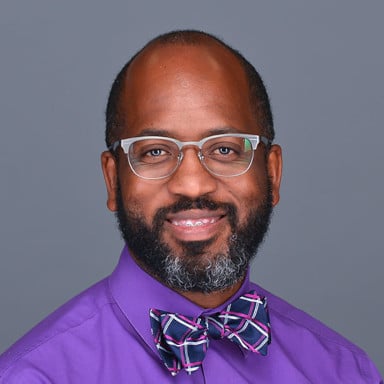
Gerald Griffin
Provost, Hope College (MI)
Gerald Griffin is provost at Hope College (MI). Griffin joined the Hope faculty in 2015 as a member of both the departments of biology and psychology. Prior to his current appointment, he served as neuroscience program director, associate provost, and interim provost. Griffin is an accomplished scholar whose research interests primarily focus on the reciprocal interactions between viruses and the nervous system. In 2019, he was named an Emerging Scholar by Diverse: Issues in Higher Education and also was the recipient of Hope’s Janet L. Anderson Excellence in Teaching Award. Griffin and his team of Hope student researchers received the college’s 2016 Social Sciences Young Investigator Award for their work with the bacterium Salmonella enterica.
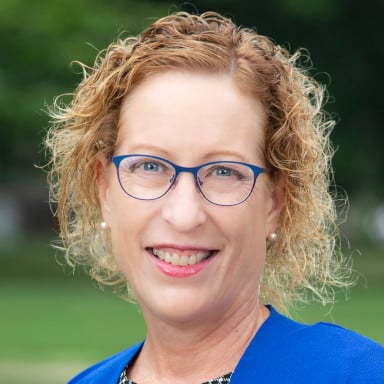
Catharine O’Connell
Provost, Illinois College
Catharine E. O’Connell has been provost at Illinois College since 2016. In this role, she has focused intensively on promoting student success, including securing and administering a Title III Strengthening Institutions grant of over $2 million. O’Connell also has been instrumental in the development of a dozen new majors and several fully online programs and in the hiring of more than 30 full-time faculty members. Before joining Illinois College, she served as chief academic officer at Mary Baldwin College (now University) (VA) and Defiance College (OH). Earlier, O’Connell held the positions of dean for academic affairs at Cabrini College (PA) and chair of the English department at St. John Fisher College (NY). Her teaching and research have focused on American literature and cultural history, particularly works by women and African American writers of the 19th century. O’Connell has presented at numerous professional meetings on such topics as community-based research, global and civic education, and small college leadership. She received CIC’s 2024 Chief Academic Officer Award for her contributions to independent higher education and exemplary service and work.
Workshop for Experienced Chief Academic Officers
Saturday, November 7
7:30 a.m.–3:00 p.m.
When you’ve mastered the fundamentals, what comes next? This workshop is for chief academic officers ready to make the transition from management to leadership in their roles. Our workshop coordinators will cover cross-role collaboration in strategic planning, professional development opportunities, and balancing your institution’s pressing immediate needs while planning for long-term success.
Join us as we discuss new approaches and perspectives to positively shape the next stage of your career and the future of your institution.
Workshop Coordinators
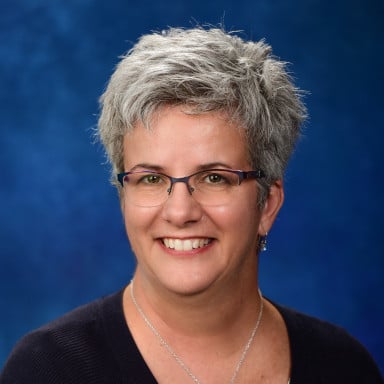
Lauren Bowen
Provost, Juniata College (PA)
Lauren Bowen, provost and professor of politics at Juniata College (PA) since 2014, served the college as acting president during the Spring 2024 semester. As provost, she has been instrumental in the renovation of the academic library and led a comprehensive revision of general education and graduation requirements to emphasize local and global engagement, ethical discernment, and understanding how knowledge is created and valued. Bowen also has worked collaboratively with the Juniata faculty to design and implement new programs and majors. Under her leadership, the college has received research and program grants from the National Endowment for the Humanities and foundations including the National Science Foundation, the Sherman Fairchild Foundation, and the Andrew W. Mellon Foundation.
Bowen came to Juniata from John Carroll University (OH), where she served as associate academic vice president for student learning initiatives and diversity. In 2000, she was an American Council on Education fellow at the College of Wooster (OH). Bowen’s research interests have focused on judicial decision making and implementation, legislative-judicial interaction at the state level, and affirmative action issues.

Celia Cook-Huffman
Provost and Dean of the Faculty, Allegheny College (PA)
Celia Cook-Huffman joined Allegheny College (PA) as provost and dean of the faculty in February 2026. She has more than 35 years of experience in higher education, distinguished by her commitment to liberal arts learning, student success, faculty development, inclusive excellence, and the development of vibrant learning communities. Before her current appointment, Cook-Huffman served as vice president for academic affairs at Manchester University (IN), her alma mater, from 2020 to 2025. Prior to returning to Manchester, she spent three decades on the faculty at Juniata College (PA), where she also held the position of associate director of the Baker Institute for Peace and Conflict Studies. As assistant provost at Juniata from 2015 to 2020, Cook-Huffman guided multiple campus-wide initiatives focused on student retention and success. Her teaching and research explore conflict dynamics across interpersonal, organizational, inter-group, and international contexts, emphasizing both the productive and destructive roles of conflict in human communities and the strategies necessary for effective response.
Aligning Data, Strategy, and Financial Practices to Advance Student Success
Saturday, November 7
7:30 a.m.–4:00 p.m.
Independent colleges face mounting pressures—from enrollment volatility and demographic shifts to affordability concerns and rising expectations for student outcomes. For senior leaders, meeting these challenges requires more than incremental adjustments. It demands an integrated, mission-centered approach that aligns academic priorities, enrollment strategy, and financial decision-making.
Grounded in the work of the National Association of College and University Business Officers (NACUBO) Student Success Hub, this interactive pre-conference workshop provides a practical framework for connecting data, strategy, and financial practices to advance sustainable student success. CIC’s Insights Tool provides access to information about your institution in the context of similar peers. To dive deeper, workshop participants will explore how to evaluate program performance, align investments with institutional priorities, and scale high-impact initiatives beyond short-term or siloed efforts.
Through facilitated discussion and scenario-based exercises, leaders will develop a shared language around academic investment and financial stewardship, identify key cross-functional metrics, and draft an actionable roadmap for integrated planning—positioning their institutions to thrive in a resource-constrained environment while staying true to mission.
By the end of the workshop, participants will be able to:
- Explain how data, institutional strategy, and financial practices can be aligned to support student success and institutional sustainability.
- Identify opportunities to strengthen cross-functional planning and decision-making across their institutions.
- Apply mission-centered approaches to institutional priorities, investments, and resource allocation.
- Develop practical next steps for advancing integrated planning and sustainable student success.
Workshop Coordinators
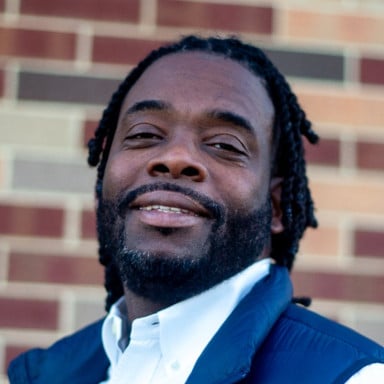
Resche D. Hines
Student Success Hub Subject Matter Expert, National Association of College and University Business Officers (NACUBO)
Resche D. Hines combines his research experience in data visualization, implementation and dissemination with his organizational leadership expertise to lead data-driven decision-making and institutional change. Hines has partnered with key stakeholders across a diverse group of institutions to support the institutionalization of high impact practices, development of integrated enrollment management plans, data governance, stewardship and security structures, alignment of enrollment planning and budgeting practices to support institutional effectiveness, implementation of program-specific competency assessments initiatives. Hines’ educational background includes a doctorate in educational administration from Michigan State University, a master’s in community psychology and a bachelor’s in psychology from the Florida Agricultural and Mechanical University.

Ellen Peters
Senior Director of Research and Membership Strategy, Council of Independent Colleges (CIC)
Ellen Peters joined the Council of Independent Colleges (CIC), in 2024 as the director of strategic research and assessment. In this role, she provides leadership for CIC’s member engagement initiatives, utilizing data to make informed decisions about future programing and offerings to current and prospective members. Prior to joining CIC, Peters was the associate provost for institutional research, planning, and student success at the University of Puget Sound (WA), a CIC member institution. She’s worked in institutional research roles at Puget Sound, Bates College (ME), and the George Washington University (DC). Peters earned her doctorate in education leadership from the University of Washington, and has a master’s degree in administration, planning, and social policy from Harvard University, and a bachelor’s degree in psychology and theater from Bates College.
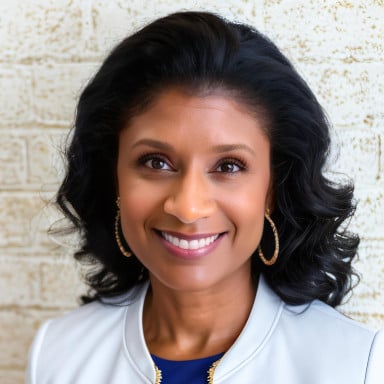
Kelli Rainey
Senior Director for Student Success Initiatives, National Association of College and University Business Officers (NACUBO)
Kelli Rainey is a higher education strategist and data-informed leader with extensive experience in institutional effectiveness, student success, and data analytics. She currently serves as senior director for student success initiatives at the National Association of College and University Business Officers (NACUBO), where she advances analytics-driven approaches that align financial decision-making with student outcomes. Rainey holds a doctorate in higher education and organizational change and brings deep expertise in accreditation, program assessment, and organizational improvement. Her work bridges research, practice, and leadership, supporting colleges and universities in navigating complexity, strengthening transparency, and building sustainable, student-centered strategies for long-term success.
Hotel and Travel
Hotel Reservations
Baltimore Marriott Waterfront Hotel
700 Aliceanna Street
Baltimore, MD 21202
Phone: (410) 385-3000
Room Rate:
$234 single/double per night
Hotel Reservation Deadline:
October 6, 2026
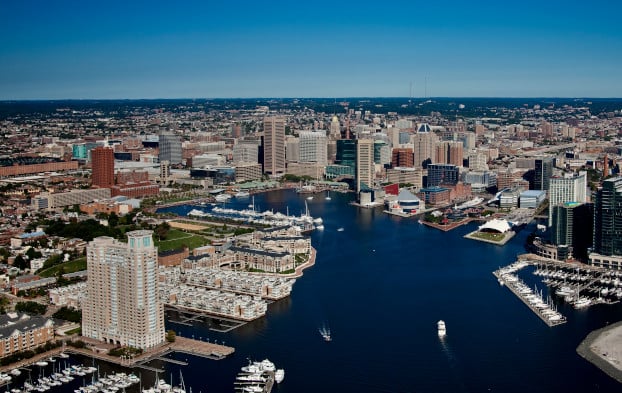
All program sessions of the Institute for Chief Academic Officers with Chief Advancement, Enrollment, Financial, and Marketing Communication Officers will be held at the Baltimore Marriott Waterfront Hotel.
Please Note the Hotel Reservation Procedure: Participants first need to register for the Institute. Upon paid Institute registration, participants will receive a confirmation email that includes detailed hotel booking instructions and a code to make a reservation at the Baltimore Marriott Waterfront Hotel at the CIC discounted rate.
The registration and hotel reservation deadline is Tuesday, October 6, 2026. Because hotel rooms may sell out before the deadline, participants are encouraged to register for the Institute and reserve their hotel rooms as soon as possible. Please note that hotel reservations made after the deadline can be accommodated only on a space-available basis and may be at a rate higher than the CIC rate.
The CIC hotel rate of $234 for single or double occupancy includes complimentary in-room Wi-Fi for all Marriott Rewards members. The discounted rate is available for rooms reserved for the period November 4–12, 2026, for participants who would like to extend their stay. Please be aware that rooms on the extended dates are limited and available on a first-come, first-served basis.
The Baltimore Marriott Waterfront Hotel is centrally located along the scenic water’s edge of Baltimore’s Inner Harbor. Guests are near many cultural, shopping, and entertainment options of the Harbor East neighborhood and the city’s downtown. Whether exploring the area on foot or via water taxi, nearby attractions include the National Aquarium, Baltimore Zoo, Maryland Science Center, Oriole Park at Camden Yards, and the Ravens’ M&T Bank Stadium, Fells Point, and Little Italy.
Transportation
Amtrak Train Service
Amtrak provides service along the northeast corridor and the southern Atlantic coastal region to Baltimore’s Penn Station multiple times per day. Consult Amtrak for detailed information on routes and departure times. The train station is located about one mile from the hotel. Taxi service is available to the hotel from Penn Station for a fare of about $15 (one way).
Airport Shuttle Service
Super Shuttle provides shared ride van shuttle service (multiple passengers/stops) to and from each of the area airports. Approximate rates are listed below. Reservations can be made online with Super Shuttle or by calling (1-800) BLUE-VAN or (800) 258-3826.
- From Baltimore/Washington International Thurgood Marshall Airport (BWI):
$46 one way; $92 round trip - From Ronald Reagan Washington International Airport (DCA):
$160 one way; $300 round trip
Taxi
Taxi service is available from Baltimore/Washington International Thurgood Marshall Airport (BWI) to the hotel for a fare of about $35 (one way). Fares from Ronald Reagan Washington International Airport and Washington Dulles International Airport are $100–$140.
Rideshare
At Baltimore/Washington International Thurgood Marshall Airport (BWI), rideshare pickups for services like Uber and Lyft are located on the Departures/Upper Level. Head to the outer curb of the Departures/Upper Level roadway. Drivers pick up passengers anywhere between Doors 5 and 12. Use the crosswalks located near Doors 5, 8, and 12 to reach the designated outer curb area.
At Ronald Reagan Washington National Airport (DCA), rideshare pickup locations vary depending on which terminal you arrive at. All app-based ride services, such as Uber and Lyft, use the same designated areas. Pickup Locations by Terminal:
- Terminal 1: Meet your driver on the third (outer) curb. From baggage claim, follow the signs for “Ground Transportation” and use the crosswalk to reach the outer lane.
- Terminal 2: Head to the Baggage Claim (Arrivals) Level—1st Floor. Exit the terminal and proceed to the outer curb. You will be assigned a specific pickup Zone (1 through 4) in the app.
Charm City Circulator
The Charm City Circulator is a free bus service with five routes through downtown Baltimore. These routes connect to other modes of transit, including Light Rail, MARC, Metro Subway, and the Baltimore Water Taxi. Call (410) 350-0456 or visit the Charm City Circulator website for more information.
Hotel Parking
(As of May 12, 2026)
Overnight valet parking is available at the hotel for $45 per night. Self-parking is available for $26 per night.
Registration Information
The deadline for the early bird registration rate is September 4. To ensure timely preparation of accurate and complete conference materials, please register for the Institute by Tuesday, October 6.
Please review the current CIC Health and Safety Guidelines and the CIC Code of Conduct before registering for the Institute.
Registration and Payment Process
Please register for the Institute online. You may pay for the Institute by:
Submit a credit card payment online.
Please select the “pay by check” option and use the following account information for your ACH payment:
Council of Independent Colleges
Routing number: (ABA) 021052053
Account number: 99387090
Addendum: CIC CAO Institute
Please select the “pay by check” option and use the following account information for your wire transfer payment:
Council of Independent Colleges
Banking Institution: Truist – Branch Banking and Trust Company (BB&T)
Routing number: 054001547
Account number: 0005163140944
SWIFT Code: BRBTUS33
Mail a check payable to “Council of Independent Colleges,” with a memo indicating the check is for the CAO Institute and a printout of your online registration page, to:
CAO Institute
Council of Independent Colleges
One Dupont Circle, NW, Suite 320
Washington, DC 20036-1142
Registration Fees
(Registration fees also include the Welcome Reception and Dinner, the All-Institute Reception, boxed lunches, and all breakfasts during the event.)
CIC Member Rates
| Early Rate (By Sep. 4) | Regular Rate (After Sep. 4) | |
|---|---|---|
| Chief Academic Officer | $865 | $925 |
| Other Academic Administrator | $750 | $825 |
| Spouse/Partner | $350 | $350 |
Non-Member Rates
| Early Rate (By Sep. 4) | Regular Rate (After Sep. 4) | |
|---|---|---|
| Chief Academic Officer | $1,050 | $1,095 |
| Other Academic Administrator | $1,000 | $1,055 |
| Spouse/Partner | $350 | $350 |
Not a CIC member? In addition to reduced registration fees for the Institute, view the full list of member benefits.
Special Events
| Welcome Reception and Dinner (see note below)* | $225 |
|---|---|
| Workshop for New Chief Academic Officers | $200 |
| Workshop for Experienced Chief Academic Officers | $200 |
| Workshop: Aligning Data, Strategy, and Financial Practices to Advance Student Success | $200 |
*Note: The Welcome Reception and Dinner is included with a full registration. This special event fee is for additional guests only.
CIC Conference Registration and Cancellation Policies
Please note that CIC requires full payment by credit card, wire transfer, or check at the time of registration.
Refunds of the registration fee (less a $50 processing fee) will be given for cancellations received, in writing (including email), no later than October 6. Refund requests received between October 7 and October 20 will incur a charge equal to 25 percent of the total registration fee. No refunds will be issued after October 20. Approved refunds will be issued after the Institute. Please send cancellation requests to the attention of the CIC conference coordinator, at conferences@cic.edu.
Participants must cancel their own hotel reservations. Canceling your Institute registration does not cancel your hotel reservation. Please contact the Baltimore Marriott Waterfront Hotel at (410) 385-3000 or follow the directions on the hotel reservation confirmation to cancel. Reservations can be changed without a fee or canceled for a full refund up to 48 hours before anticipated arrival.
Contact Information
If you have registration questions, contact CIC by phone at (202) 466-7230 or by email at conferences@cic.edu.
Local Attractions
Baltimore Basilica
The Baltimore Basilica, formerly the Basilica of the National Shrine of the Assumption of the Blessed Virgin Mary, was the first Roman Catholic cathedral built in the United States. Constructed from 1806 to 1821, the Baltimore Basilica is an impressive architectural masterpiece and a National Historic Landmark.
Baltimore Museum of Art
The Baltimore Museum of Art (BMA) is home to more than 95,000 works of art, including an extensive collection of American Art dating back to the colonial period, along with contemporary painting and sculpture from around the world. BMA also is one of the first museums in the country to have exhibited works by African American artists. Located three miles north of Baltimore’s Inner Harbor, the museum is open Wednesday through Sunday, from 10:00 a.m. –5:00 p.m. Admission is free.
Fort McHenry National Monument and Historic Shrine
Built on a peninsula, Fort McHenry played a crucial role in one of the key battles in the War of 1812. It is considered the birthplace of the U.S. national anthem, where Francis Scott Key was moved to write the “The Star Spangled Banner” lyrics as he watched the fort’s bombardment. When a new flag is designed, it flies over Fort McHenry first. It is currently the only site in the United States designated as both a national monument and a historic shrine.
Maryland Science Center
Located a few blocks from the Inner Harbor, the Science Center offers interactive educational displays within its three floors of exhibits. The most popular exhibits include Outer Space Place, where the Hubble Space Telescope National Visitor Center and Space Link are housed; DinoQuest; an IMAX Theater; and the Davis Planetarium.
National Aquarium
The National Aquarium in Baltimore, whose mission is to inspire conservation of the world’s aquatic treasures, is Maryland’s number one tourist attraction. Visitors will feel as though they are part of the resident sharks’ habitat as they walk inside the donut-shaped shark tank. Dolphin Discovery is the aquarium’s largest exhibit, home to seven Atlantic bottle-nosed dolphins. The aquarium’s conservation efforts include partnerships with local organizations to improve and preserve the natural beauty and wildlife habitat of Baltimore’s harbor.
Chief Academic Officers Task Force
The program of the 2026 Institute is being planned with the assistance of CIC’s Chief Academic Officers Task Force. Members include:
Tina DeNeen, Associate Executive Director Education & Member Development, American Association of Collegiate Registrars and Admissions Officers (AACRAO)
Brian Flahaven, Vice President for Strategic Partnerships, Council for Advancement and Support of Education (CASE)
Kristin Flora, Vice President for Academic Affairs and Dean of the College, Franklin College (IN)
Brad Fuster, Provost and Vice President for Academic & Student Affairs, San Francisco Bay University (CA)
Gerald Griffin, Provost, Hope College (MI)
Debora Johnson-Ross, Vice President for Academic Affairs and Dean of the Faculty, Wartburg College (IA)
Karen An-hwei Lee, Provost, Wheaton College (IL)
Randy Roberson, Vice President for Leadership Development, National Association of College and University Business Officers (NACUBO)
Monique Taylor, Provost and Chief Academic Officer, Champlain College (VT)
Gregor Thuswaldner, Vice President for Academic Affairs and Dean of the Faculty, La Roche University (PA)
Titi Ufomata, Senior Vice President for Academic Programs, Council of Independent Colleges (CIC)
Marianne Ward Peradoza, Provost, St. Edward’s University (TX)