
The 2025 Institute for Chief Academic Officers took place in November in Indianapolis, IN. This year’s theme was Building Places of Promise: Unlocking Student Success, and programming focused on uniting around foundational values—mission, passion, and purpose—to create student-centered environments where students can thrive through resilience and belonging. This year, the invited roles included chief academic officers; chief student affairs officers; chief student success officers; chief diversity officers; belonging, inclusion, and culture officers; teaching and learning center professionals; career services professionals; and academic affairs team members. Topics for interactive seminars and concurrent sessions included navigating academic freedom, managing campus conflict, preparing students for meaningful careers, integrating AI on campus, campus free expression, civil discourse, student success, legal issues surrounding higher education, and sustaining wellness.
Highlights and Fast Facts
- Total Attendees: 498
- States Represented: 41
- Countries Represented: 3
- Most Popular Sessions (According to Guidebook)
Plenary Sessions
Higher education stands at a crossroads. As AI reshapes the workforce, costs soar, and skepticism about the value of a degree intensifies, colleges must fundamentally reimagine what student success looks like. At the Keynote Address, “Four Keys to Delivering a Holistic and Transformational Student Experience,” Amelia Parnell, president of NASPA, Student Affairs Administrators in Higher Education, argued that delivering this experience requires every campus role to work in concert, especially as institutions face unprecedented challenges and rapid change. Flexibility is essential, and prioritizing health, safety, and wellbeing, as well as fostering partnerships across campus, is key to supporting students. According to Parnell, the next few years will likely see stronger inter-campus connections, a renewed emphasis on the liberal arts, and a redefinition of student success where students are expected to interpret complex information and interconnected systems.
Institutions must balance routine operations with innovation, manage crises and change effectively, and find the right mix between respecting privacy and being proactive in student support. Integrating academic, financial, social, and wellness resources at a high level and an individual level is crucial. With 84 percent of students still believing in the value of a college degree, but many facing loneliness, basic needs insecurity, and rapid technological disruption, campuses must focus on their unique strengths and avoid direct comparisons, ensuring that every student’s experience is both interconnected and transformative.
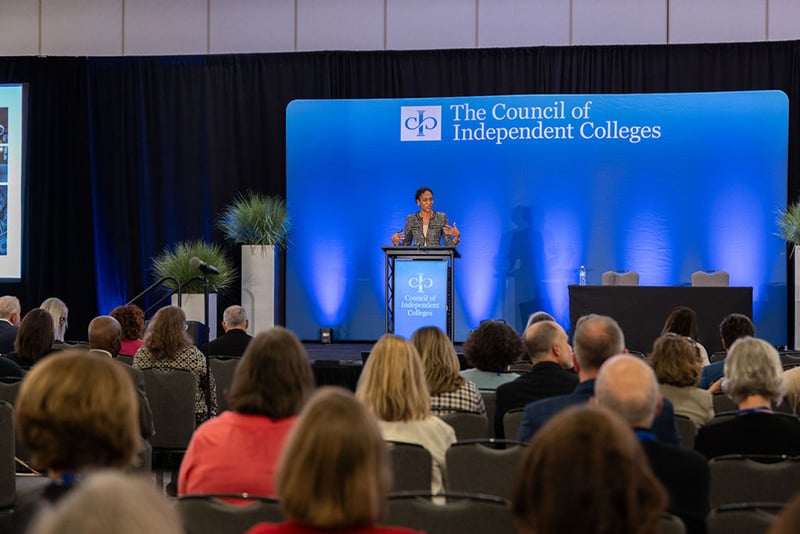
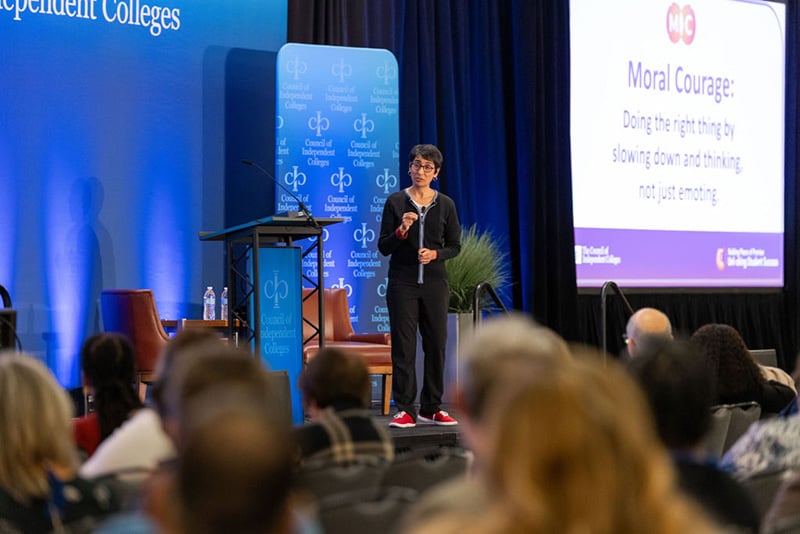
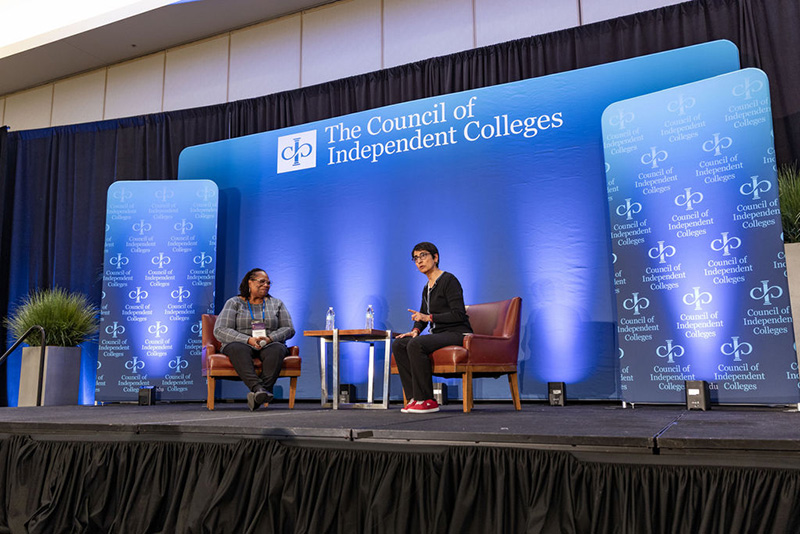
In a climate increasingly defined by polarized shouting matches and “win-at-all-costs” debates, how can campus leaders foster unity without demanding uniformity? During the second plenary session, “Moral Courage: A Skill Set for Campus Unity—Without Uniformity,” Irshad Manji, founder of Moral Courage College, explained that the answer lies in intentionally slowing down to think and act with integrity, rather than simply reacting emotionally. It involves embracing a “both/and” mindset—remaining loyal to your own group while genuinely seeking and creating common ground with others. Traditional debates often fail because they focus on winning, which shuts down listening and pushes everyone onto the defensive, eroding trust and harming wellbeing. True moral courage requires vulnerability, authentic curiosity, and a willingness to ask sincere questions, repeat and reflect on what others say, and give space for all identities to be shared.
Establishing a culture of two-way dialogue requires standing up to our own egos and prioritizing relationship over argument. Practical skills include deep breathing to regulate emotions, asking open-ended questions like “Tell me more…,” and listening to learn rather than just to respond. While you can’t control others, practicing these habits is an act of self-care that builds resilience and agility, making it more likely that meaningful connection and reconciliation can occur. As a follow-up to her morning plenary, Manji hosted an immersive session to further explore the five core skills of Moral Courage.
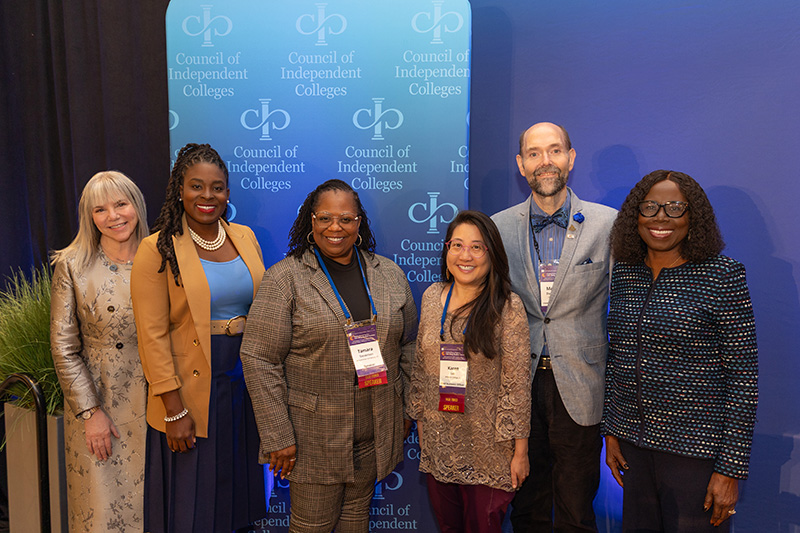
It is more essential than ever to work together across campus roles and departments. The closing plenary session, “The Power of We: Collaboration for Student Success,” featured a panel discussion. Matthew Damschroder, vice president of student life and dean of students of Juniata College (PA); Karen An-hwei Lee, provost of Wheaton College (IL); and Tamara Stevenson, vice president of diversity, equity, and inclusion and chief diversity officer of Westminster University (UT), shared their thoughts about the importance of collaboration across campus divisions—such as Student Life, Business Development, and Academic Affairs. Tynisha D. Willingham, provost and vice president of academic affairs of Eastern Mennonite University (VA), moderated the discussion. Panelists shared initiatives on their campus to highlight how working together can yield both practical solutions and opportunities for students to gain cultural competency and community engagement, while the institution addresses barriers to access.
As higher education faces skepticism about the value of a degree, the rise of AI, and increasingly diverse student backgrounds, deeper collaboration is needed to frame these challenges ethically and holistically. This means integrating inclusion work into every facet of the institution—not as a standalone “feelings” office, but as a core driver of access and opportunity. Leaders must balance conflicting demands, practice servant leadership, and create space for all voices, recognizing their own humanity and the need to serve both campus and broader communities. Ultimately, the “master key” to student success is access—informational, operational, financial, and socio-cultural—built on trust and intentionality, with leadership modeled through actions as much as words.
Concurrent Sessions and Interactive Seminars
The Institute for Chief Academic Officers offered many engaging concurrent sessions, including “Building Together: Collaborating to Maximize and Innovate,” “A Day in the Life of a Chief Student Affairs Officer—No Two Days Are the Same,” “The Art/Arc of Being Provost,” “Doing Belonging Work in 2025,” and “Partnering for Progress: Innovative Approaches to Community and Business Engagement.”
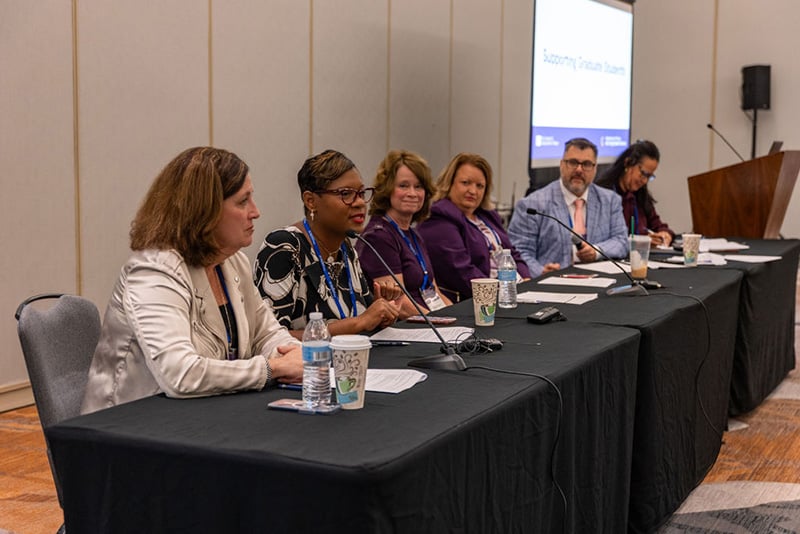
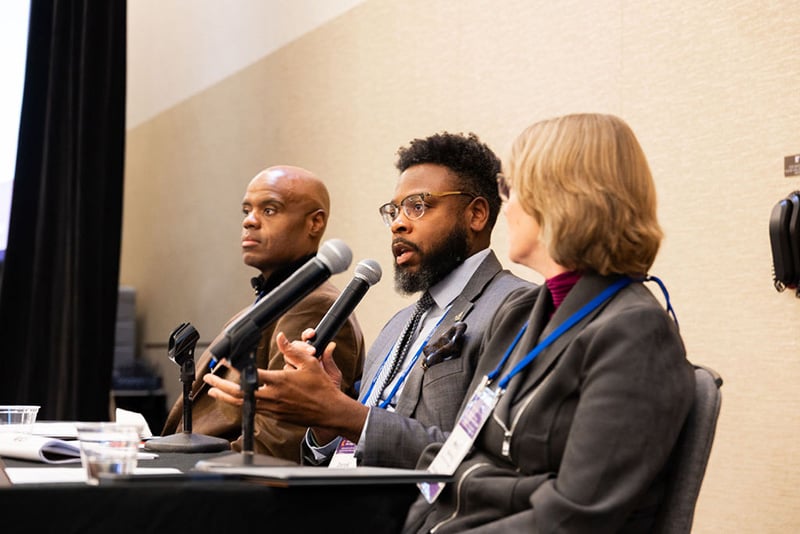
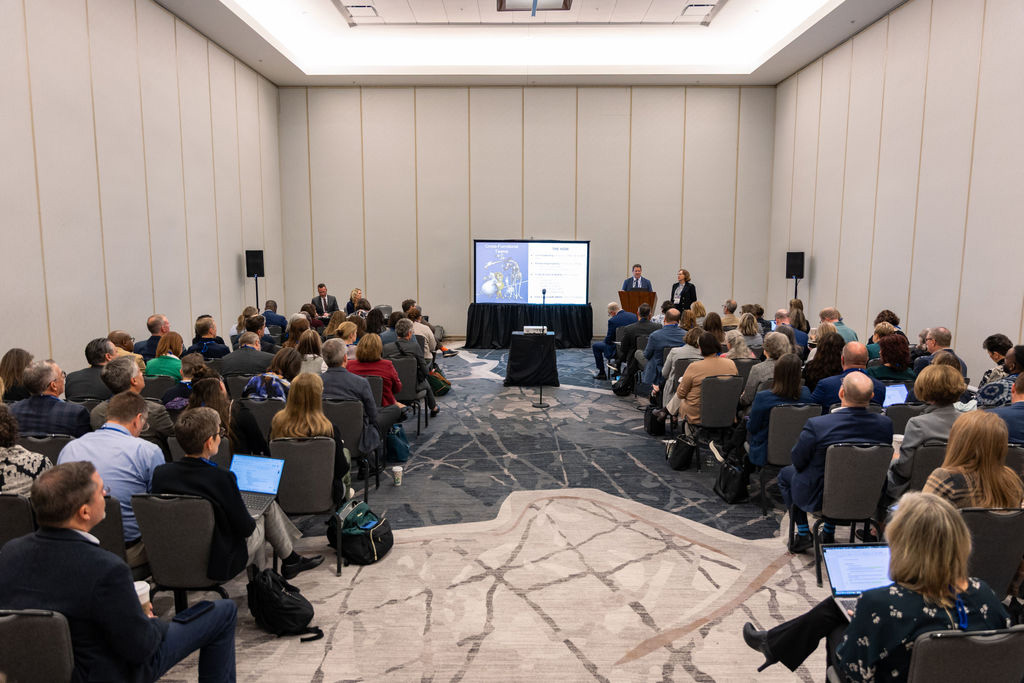
CIC again offered Interactive Seminars to highlight important issues that currently impact independent higher education. Designed to be practical and hands on with clear learning outcomes, these seminar topics included “AI in Action: Practical Implementation for Institutional Leadership,” “Fostering a Culture of Free Expression and Civil Discourse,” “Leading with Joy in Uncertain Times: Wellness, Boundaries, and Bold Leadership,” and “Understanding and Navigating the Dynamic Legal Hurdles on the Track to Student Success.”
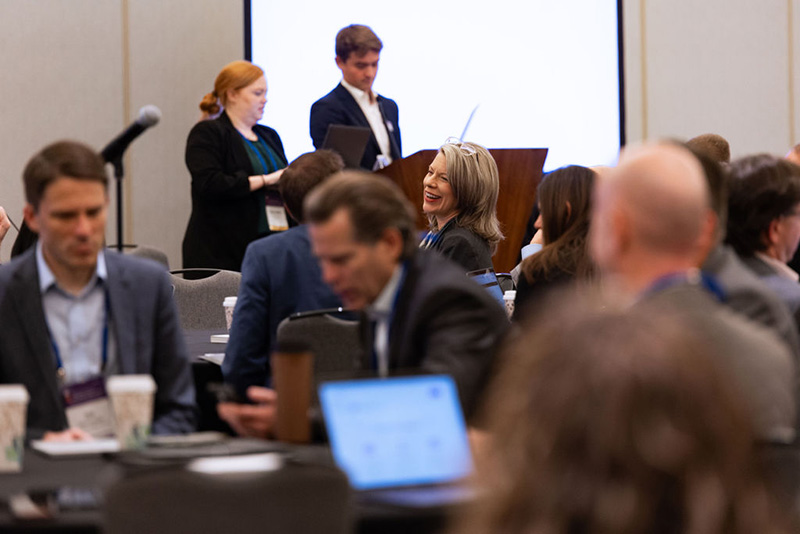
Other Featured Sessions and Highlights
Wellness is essential for administrators, too! There was a yoga wellness session offered free of charge to all Institute participants, and participants were also invited to spend some time for relaxed and informal sharing of a favorite poem (or to listen as a member of the audience).
As a follow-up to her morning plenary, Irshad Manji hosted an immersive session to further explore the five core skills of Moral Courage. The goals of the moral courage framework are to ease people out of polarity and into pluralism, reframe “belonging” to honor different viewpoints, and foster trust in order to establish truth. Participants had the opportunity to practice with her through curated, relevant scenarios.
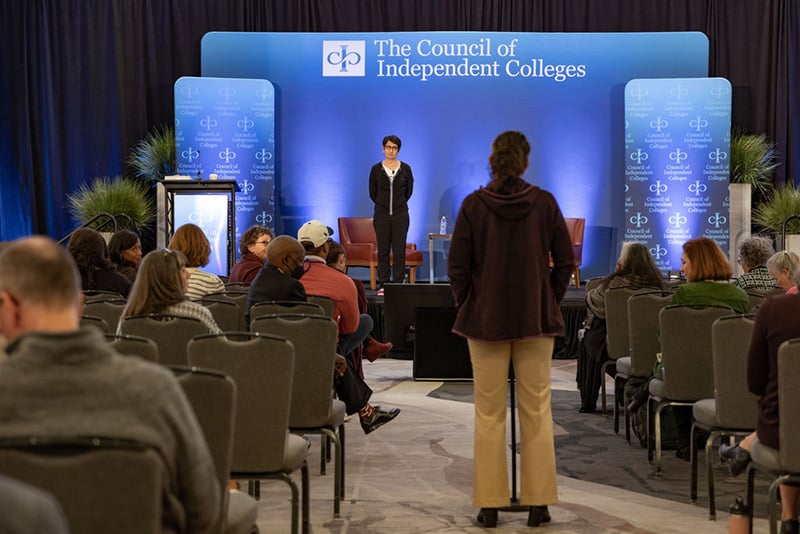
Before the main Institute even began, participants had the chance to dive deeper through one of three targeted pre-Institute workshops—each designed to meet leaders exactly where they are: the Workshop for New Chief Academic Officers for chief academic officers who have served for fewer than two years, the Workshop for Experienced Chief Academic Officers who have served for three or more years, and Programming for Effective Student Success, which was new this year and designed for those in roles that collaborate on student success on campus. Each workshop delivered what leaders need most: expert coaching, meaningful networking, inspiration to take back to campus, and a supportive community that understands the work.
The 2025 Institute for Chief Academic Officers had 28 sponsors, including five new sponsors. Thank you to all of our sponsors for their generous support of this year’s Institute.

2025 Institute for Chief Academic Officers Award Recipients
2025 Chief Academic Officer Award
The 2025 Chief Academic Officer Award was presented to Jeffrey Frick. Frick, vice president for academic affairs and dean at Washington & Jefferson College (PA) since 2019, was recognized for his leadership in independent higher education, with prior roles at St. Norbert College and Illinois Wesleyan University, and notable contributions as an author, peer reviewer, and a past member of CIC’s Chief Academic Officers Task Force.
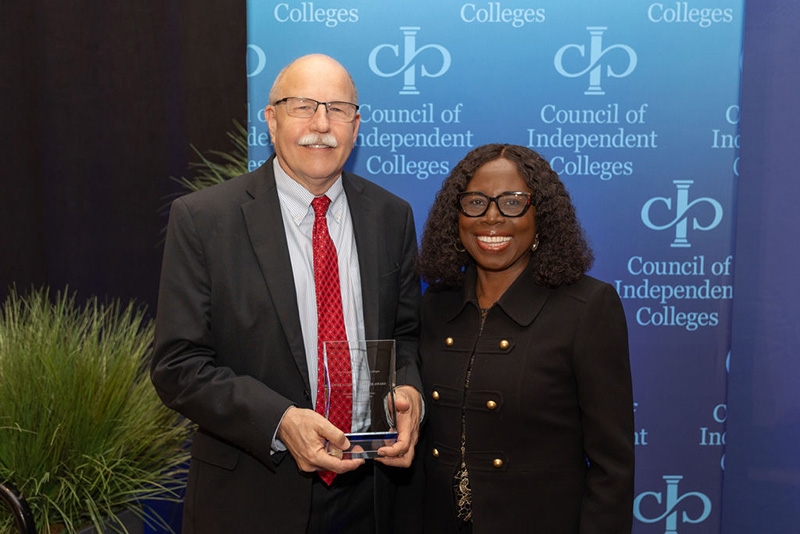
2025 Institute for Chief Academic Officers Task Force Award
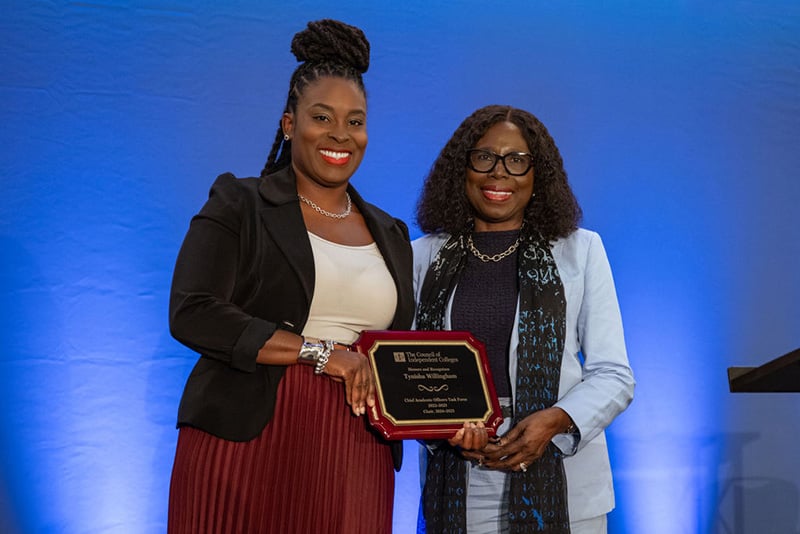
Tynisha Willingham, provost and vice president of academic affairs at Eastern Mennonite University (VA), received the 2025 Institute for Chief Academic Officers Task Force Award for her 20+ years of academic leadership and her data-driven work to advance student success. She served on CIC’s Chief Academic Officers Task Force from 2022 to 2025, and as the chair from 2024 to 2025, and she co-coordinated the Women’s Administrators Luncheon at multiple Institutes for Chief Academic Officers.