

2026 Conference Reflections
Concurrent Campus Sessions: Lessons From the Field
With 18 different campus sessions offered at the conference, no single participant could experience all of the wisdom, innovation, and exploration that our NetVUE institutions shared during these concurrent sessions of the conference. This article can only provide a snapshot of the full offering; four NetVUE staff members offer their insights on a particular campus session. These reflections highlight the way NetVUE invites different institutions to implement vocational exploration in such varied context-specific approaches.
Creating a Pathway to Participation: Engaging Faculty and Staff Across Campus in Vocation
By Erin VanLaningham, NetVUE Director of Project Development
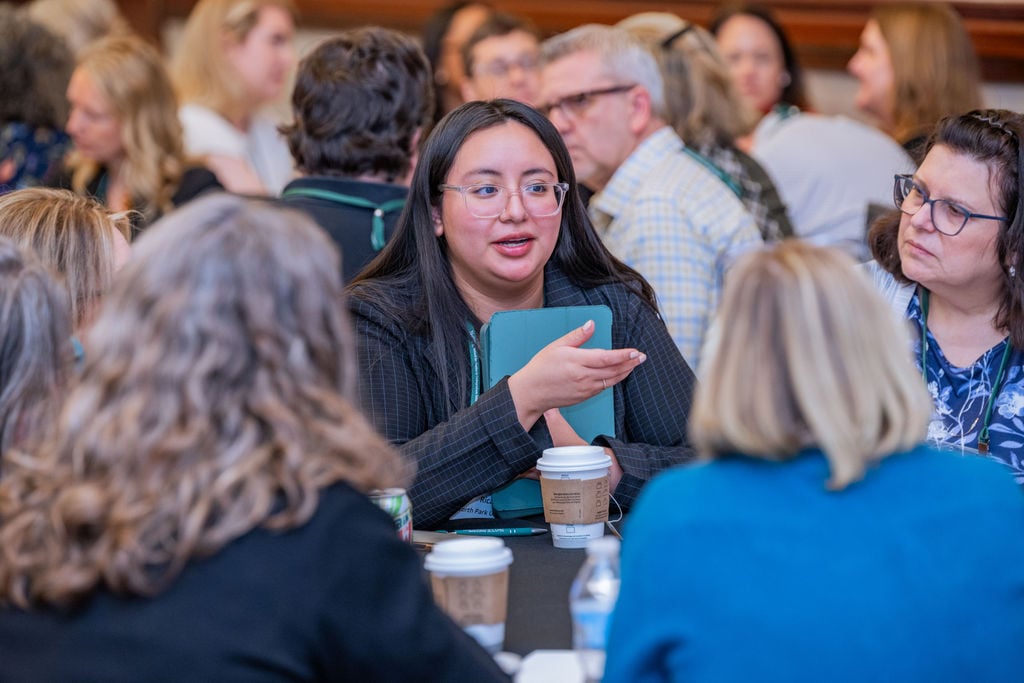
Building a campus culture of vocation was the focus of this session by two campus teams—one from Loras College (IA) and one from Point Loma Nazarene University (CA). One model explored the creation of a yearlong professional development program that was open to all faculty and staff across campus, focusing on topics such as vocation and advising, vocation and pedagogy, and vocation and community. These modules were offered in three-hour sessions during the workday, with senior leadership approving attendance as part of an individual’s daily work hours. The second model offered mini-grants to faculty members who applied to incorporate vocational exploration into an existing majors course or a general education class. They also could choose to partner with a career services staff member. Other aspects of the programs included campus speakers, introduction to vocation sessions, and participants’ presentations after learning in these programs.
There were several major takeaways from these programs—the most significant being that both models increased the sense of community across campus and lessened the feeling of working in “silos.” The programs fostered a cohort experience which helped all participants approach their work with greater commitment and creativity. Furthermore, the programs engaged many different disciplines and campus programs and managed to be successful at requiring a higher level of time commitment (for the topical program, a commitment to attend the full 3-hour session and the grant program, 40 hours across the year). I was struck by the feeling of mentorship and personal renewal that these experiences generated, even though these results were not listed as goals. Lastly, it was delightful to learn of the robust programming on vocation scholarship, teaching, and reflection on both these campuses, and its lasting impact on their communities.
Connecting Vocation and the Academic Disciplines
By Jane Walters, NetVUE Grants and Membership Manager
Drawing on insights from Abilene Christian University’s (TX) program development grant and professional development award, panelists Laura Carroll, Amy McLaughlin-Sheasby, and Chris Riley shared their experiences developing and integrating student-centered formational initiatives into academic programs. The discussion highlighted both successes and challenges encountered throughout the implementation process.
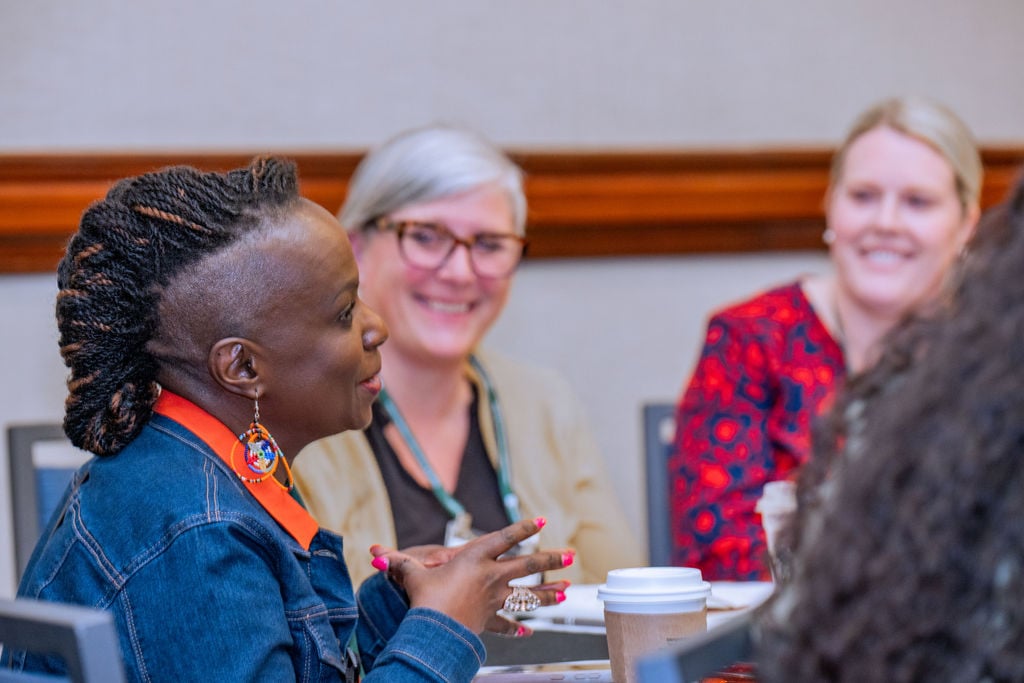
A central theme emerged around the necessity of faculty formation preceding student engagement. The speakers emphasized that faculty and staff must first engage in their own vocational reflection before effectively guiding students through similar journeys. Similar to putting on your own oxygen mask in a flight before helping the person next to you, faculty and staff on campus needed time to feel more confident and guide themselves through the discernment of their own vocational journeys before turning to their students. Abilene Christian addressed this need by hosting a retreat which included 24 out of 25 faculty departments on campus. It allowed for their own career and vocational formation, as well as helping them gain knowledge that they could bring back to meet the needs of students in every department.
The session also included guided reflection, offering participants strategic questions to adapt these concepts for their own contexts. Participants considered prompts such as: “How can you empower faculty on your campus to develop or expand formational experiences?” and “What are the barriers to student access and how might you address those barriers?” These questions equipped participants to initiate meaningful conversations about vocational formation within their own institutional settings. Overall, the session offered an inspiring picture of successful NetVUE grant implementation, demonstrating how intentional programming can address critical questions about faculty development and student vocational formation across an entire campus.
1500 Purposeful Conversations with Students
By Robert Pampel, NetVUE Grant Program Officer
When striving to achieve deep, interpersonal connections that are necessary to guide students towards vocational discernment, the goal isn’t a matter of simple arithmetic. For Carthage College (WI), the ambitious goal of achieving 1,500 purposeful conversations with students required a bit of math to conceptualize. Over the last several years, Carthage’s Callings program has trained 75 staff and faculty members to pursue at least two vocational conversations with ten students apiece. When you add it all up, Carthage has achieved the impressive feat of facilitating 1,500 of these meaningful moments with students.
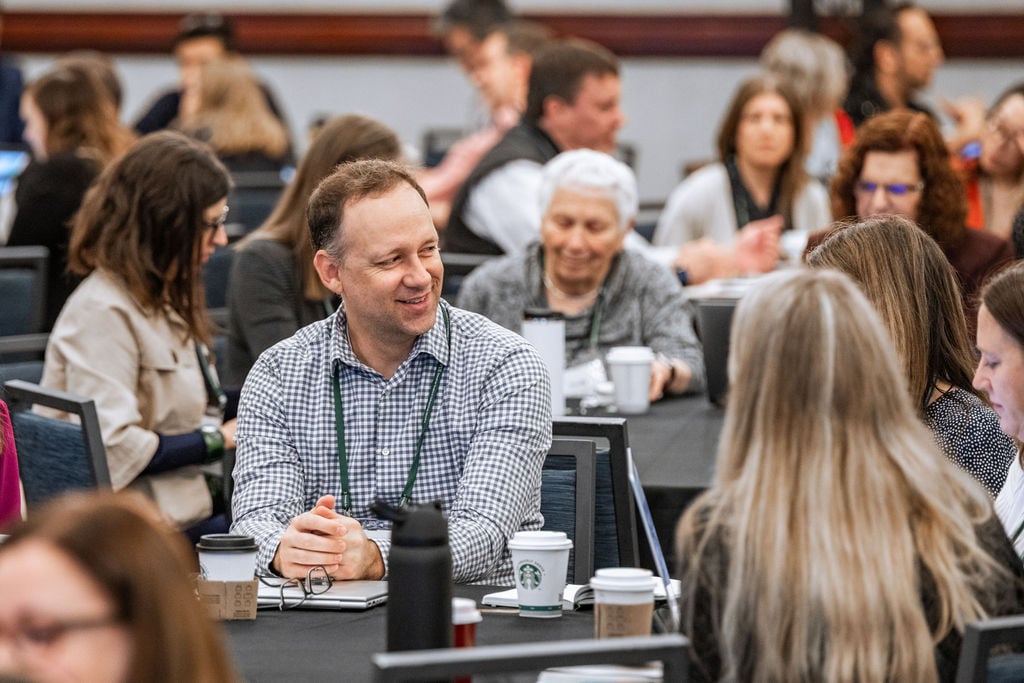
This number might catch your attention, but the Callings program’s real virtues lie in the deep sense of camaraderie it has created among faculty members and staff and in the robust foundations on which their mentoring curriculum is built. Using two different models to foster vocational conversations, campus leaders identified five big ideas as the basis for reflection with colleagues, which translated into five topics for purposeful conversations with students: spheres of responsibility we all occupy at different times in our lives, the role of privilege in vocation, the relationship between virtue and vocation, the tyranny of choice that often accompanies vocational thinking, and the importance of self-knowledge and self-transcendence in navigating moments of discernment.
Each of these weighty ideas could form the basis for multiple purposeful conversations, but they’re also universal enough to spawn conversations that bridge divides and invite thoughtful reflection. Campuses can often feel (whether real or imagined) stratified between faculty members and staff or faculty members and students. The Callings program worked against these barriers by prompting faculty members and staff to map their own vocations and discuss these experiences in community with one another first, then by opening this conversation to students in the same way. As you think about your own campus, where can you start building coalitions of staff and faculty members to have similar conversations? How would you structure a program to reach students in a similar way? Your goal doesn’t have to be to achieve 1,500 purposeful conversations, but by starting with a group of willing campus champions, you might gain momentum faster than you think!
Vocation-Centered Internships, Community Partnerships, and Student Flourishing
By Geoffrey Bateman, NetVUE Blog Editor
In this session, Alisa Hove and Lindsey Kass-Green of Warren Wilson College (NC) and Kara Van Marion of Trinity Christian College (IL) shared two different models for integrating internships into the curriculum and vocational programming at their institutions. In their work, they have often found that experiential learning and hands-on, practical opportunities help students explore and discern their vocations. Experiential learning—what the presenters referred to as “learning by doing”—follows a cycle, starting with a concrete experience, followed by a guided opportunity to reflect on it. Students are invited to explore what they learned from the experience, to make sense of it, and then to continue to experiment with additional learning activities. They argued that internships are especially effective in this regard, because they allow students to engage this cycle in a sustained process. They also increase students’ employability and allow them to test out their interests, both formally and informally.
One of the features of this approach at both institutions is that internships or other experiential learning practices are required of all their students—although the two institutions do it differently. As a work college, Warren Wilson uses a more decentralized model, embedding the internship experience into academic departments with support from dedicated center, while Trinity operates a more centralized model as a way to alleviate the administrative burden on faculty and to reduce the financial barriers for students. Presenters also discussed strategies they used to build campus-wide support for these initiatives, which involved convening faculty working groups and clear and consistent communication across the institution—first on why it is important and beneficial to students to do this work, and then how best to do it. The session also devoted time to stressing the importance of embedding reflection into the curriculum that accompanies these learning activities, as well as meaningful assessment of these emerging programs.
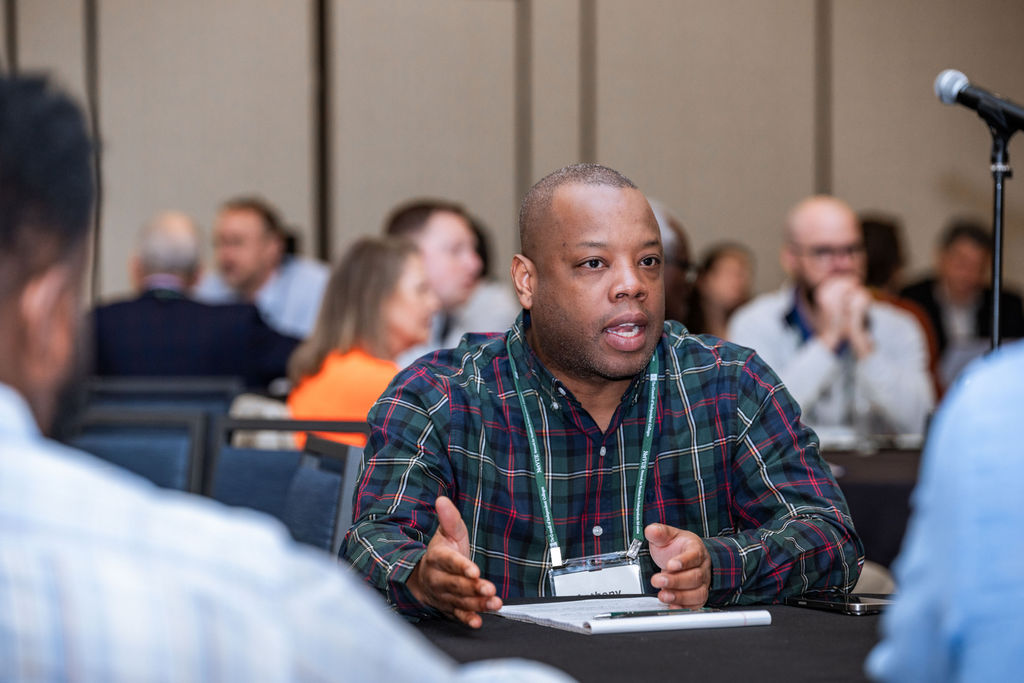
After initial questions, participants broke up into small groups to discuss various aspects of building these kinds of programs. In the group focusing on barriers to this work, participants engaged productively in surfacing the challenges many faced on their campuses—including training of faculty and community partners, student readiness and the financial barriers they face, and tracking and managing of partnerships. Colleagues were able to share their experiences with these issues, moving the conversation forward for everyone at the table. Even for campuses who might not be able to require internships and other kinds of experiential learning opportunities for all their students, the session and the discussions that ensued were generative, prompting participants to see the value of this kind of work for our students’ vocational exploration.
Back to Top
To report a technical problem with the website, or to offer suggestions for navigation and content issues, please contact Madeline Smanik, NetVUE communications specialist, at msmanik@cic.edu.