


2026 Conference Reflections
Learning about NetVUE Resources, Opportunities, and Grants at the Conference
One goal of any NetVUE conference is to help orient our colleagues to the ever-expanding array of resources and opportunities provided to NetVUE institutions. This year, NetVUE utililzed a portion of the conference schedule to share information about NetVUE resources and opportunities. Sessions included a live recording of NetVUE’s podcast Callings, information about Scriptural Reasoning, how to engage NetVUE’s Big Read, and much more. Below are two reflections from this portion of the conference: the first focuses on a session on the NetVUE Conversation Cards and the second reflects on the session designed for drop-in consultations for campus teams or individuals. In addition, after the conference, NetVUE hosted a workshop focused on one of NetVUE’s primary resources: grants. See below for a reflection on that workshop as well.
Ask Me Another! Using NetVUE Conversation Cards on Your Campus
By Ashley Woodbeck, NetVUE Office Manager
NetVUE Conversation Cards are a tool designed to promote discussion, reflection, and connection among students in a classroom setting, and they are the creation of NetVUE’s director of resource development, Krista Hughes. However, the strength of the cards lies in the fact that other members of the NetVUE network were vital in helping to create the diversity of the cards themselves, so that they can be effective for the broad and diverse range of those at member institutions.
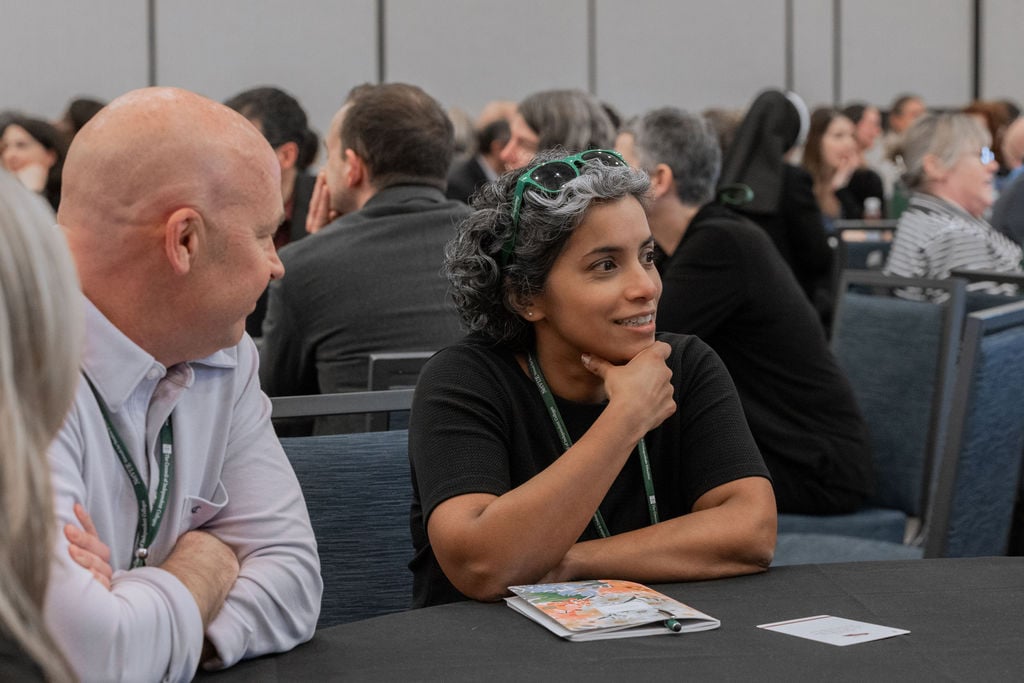
At the conference, this session offered a unique venue to introduce the cards to colleagues and to create space for imagining their application. At their tables, participants were instructed to read aloud a question from the deck, and each person at the table was encouraged to share their response; discussion was lively and energetic. The presenters then shared the different ways they use the cards: as conversation starters, in specific courses such as language or cultural studies, among faculty and staff, during community dinners, for international and study away programs, for campus clubs, and for a variety of retreats.
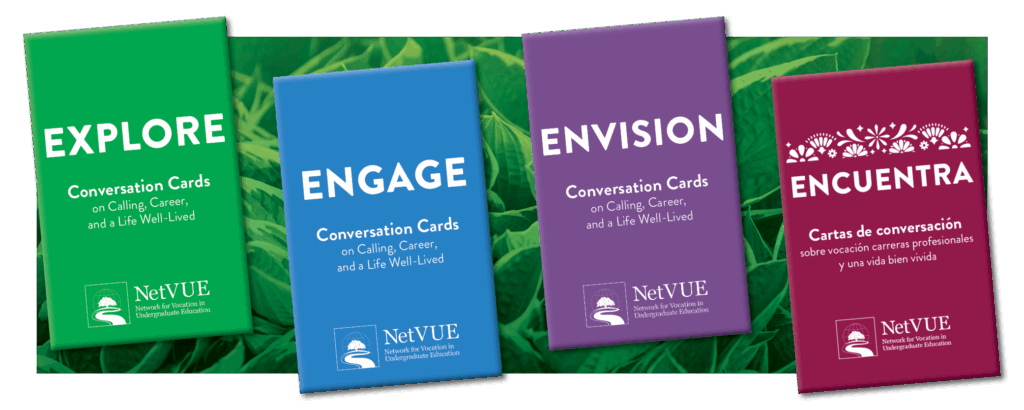
After this introduction to how to use the cards, participants also learned about the four decks currentely available to campuses: Explore, Engage, Envision, and Encuentra. Each deck has a theme: Explore asks participants to reflect on their past and how it has led them to who they are; Engage offers them opportunity to think more about their current activities; Envision challenges them to reflect on their future lives as a whole; and Encuentra challenges users to consider their cultural roots and how these shape their sense of self. The cards are also broken up into three different levels. Level one is most used as an ice breaker among students who don’t know one another well, and levels two and three offer deeper reflection and connection.
It was encouraging to see session participants engaged in conversation with one another. In response to what these cards asked of them, they shared openly their experiences, doubts, and optimism, and they reflected on how they could use the cards on their own campuses and in their own classrooms. Many participants saw the cards as an additional benefit to faculty and staff, specifically for professional development. You can learn more about this resource at the NetVUE Conversation Cards webpage and explore how to obtain more decks for your campus.
Drop-in Consultations for Individuals and Campus Teams
By Abigail Dean, NetVUE Projects Coordinator
The drop-in consultation session at this year’s NetVUE conference offered participants an opportunity for direct, face-to-face dialogue with members of the NetVUE grants team and NetVUE consultants. The session provided dedicated time to work through questions regarding ongoing grant applications, frame long-term goals for institutions’ vocational narratives, and introduce newer members to the breadth of professional development and grant opportunities NetVUE provides.
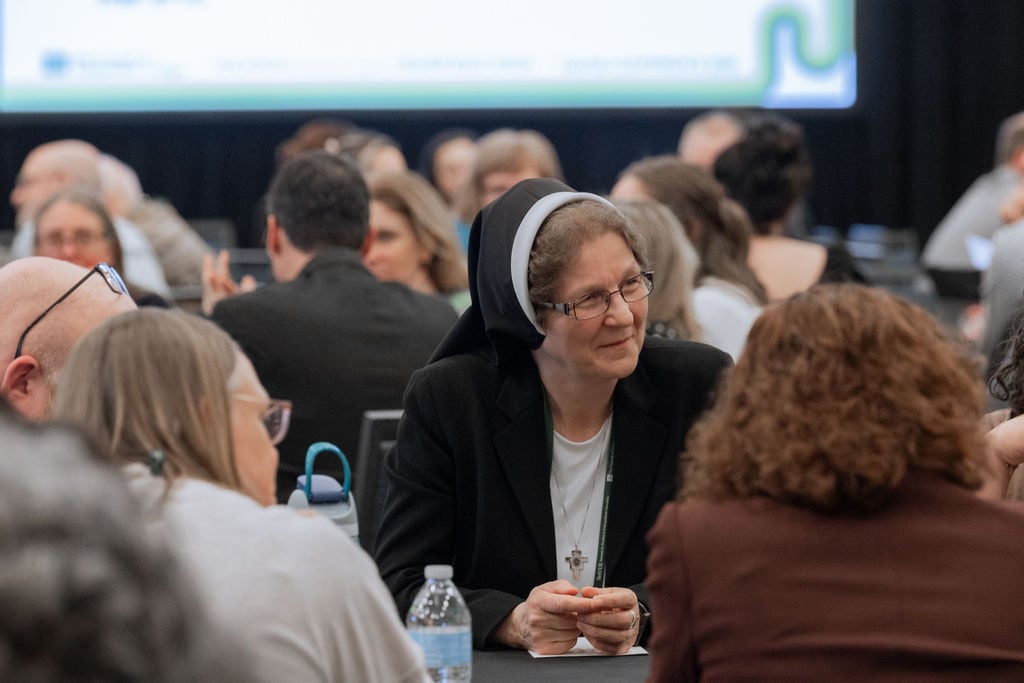
Several participants visited the consultants with groups of colleagues from their institutions to learn more about the Grant for Reframing the Institutional Saga, a three-year initiative that critically examines an institution’s vocation and history. Others joined independently, seeking advice and feedback on the Grant to Individuals for Vocational Exploration, a new award supporting scholarly research and pedagogical innovation that deepens the national conversation around vocation in undergraduate education.
For newer members, NetVUE’s consultants discussed ways to get started with vocation programming through workshops or focused consultations. These professional development programs bring experienced consultants to institutions to support vocation-related initiatives on campus. Facilitating vocational conversation among faculty and staff, these visits can help establish a shared vocabulary for vocation and set institutional goals for vocation-related programming.
Many participants spoke with consultants about applying for a Professional Development Award, a grant that seeks to enhance the expertise of faculty and staff who guide undergraduate vocational initiatives at their institution.
Participants represented institutions from Montana to Maine, and international universities from Canada and Kenya—all united in their desire to invest further into vocational initiatives on their campuses. With full tables and active discussion, the session served as an ideal venue for members to discover the wealth of opportunities NetVUE provides.
Post-Conference Workshop: Writing a Compelling NetVUE Grant Proposal
By Jane Walters, NetVUE Grants and Membership Manager
Led by the NetVUE grants team—Carter Aikin, Kari Kloos, Robert Pampel, and Jane Walters—this comprehensive session introduced participants to the full spectrum of grant opportunities available to members. The presentation provided practical guidance for navigating the application process while helping participants identify which funding opportunities best aligned with their institutional goals.
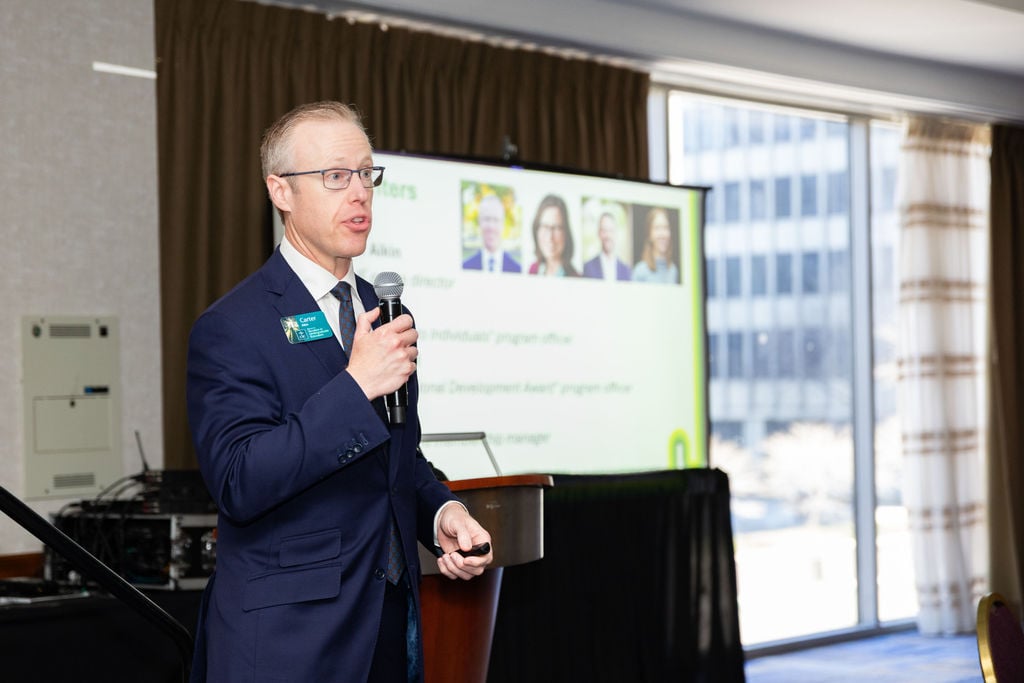
Participants learned how to craft compelling narratives that effectively communicate their project’s vision and impact. The team provided guidance on developing realistic budgets that align with NetVUE’s funding guidelines, ensuring proposals demonstrate both fiscal responsibility and programmatic ambition. Additionally, the presentation included proven strategies for managing and implementing successful grant-funded projects, drawing from the team’s experience supporting institutions throughout the grant lifecycle.
Following the formal presentation, the session transitioned into time for individualized consultation. This structure allowed participants to engage in substantive, one-on-one conversations with session leaders tailored to their specific needs. Some participants used this time to explore the complexities of ongoing grant projects, to troubleshoot challenges, and to refine their implementation strategies. Others brought ideas for future proposals, receiving feedback on concept development, feasibility, and alignment with NetVUE’s funding priorities.
Combining a broad overview with personalized consultation proved particularly valuable for both newcomers seeking foundational knowledge and experienced grant recipients looking to deepen their engagement with NetVUE’s funding opportunities.
Back to Top
To report a technical problem with the website, or to offer suggestions for navigation and content issues, please contact Madeline Smanik, NetVUE communications specialist, at msmanik@cic.edu.
To report a technical problem with the website, or to offer suggestions for navigation and content issues, please contact Madeline Smanik, NetVUE communications specialist, at msmanik@cic.edu.