

2026 Conference Reflections
Reflections on the Quarter-Plenary Sessions: Advocacy, Advising, AI, and Athletics
The quarter-plenaries at the 2026 NetVUE Conference provided an opportunity for campus teams to split up and to encounter multiple timely topics in higher education, examining further these four issues’ relationship to vocational exploration: advocacy, advising, AI, and athletics. This format allowed for a greater number of voices from across our network institutions to share their knowledge on these topics, while also helping campus teams to engage in a wider range of issues relevant to many campuses, demonstrating the capacious nature of vocation within higher education. Each topic provides fertile ground—not only for student programming, but for questions of the institution’s vocation as well. Whether the four topics are aligned to your work or not, keep reading; chances are high that someone on your campus is wrestling with the issues described here.
Advocacy and Vocation in Troubled Times
By Daniel Meyers, NetVUE Chaplaincy Planning Initiative and Online Community Coordinator
This quarter-plenary session drew a strong audience and featured three speakers who each shared lessons from their own contexts. Each speaker opened with a story demonstrating why advocacy matters in our current national moment. In the second part of the session, they shared models and frameworks for participants to consider. In the third part, presenters offered practical strategies to help colleagues and institutions respond to our challenging times in ways that align with their vocational commitments.
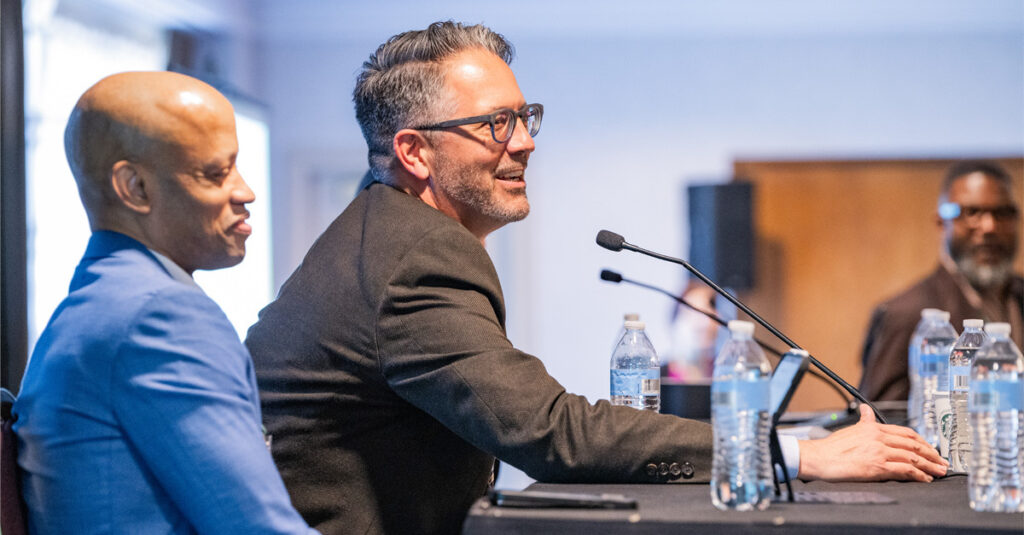
Joanna Gregson of Pacific Lutheran University (WA) began by describing how officials in the Trump administration publicly accused PLU and other colleges in the spring of 2025 of “money laundering under the cloak of religion.” As the situation unfolded, Gregson framed this crisis as a chance to fully commit to PLU’s mission. Instead of reacting defensively or trying to limit damage, she and other leaders focused on a guiding question: “For whom are we doing this work?” Her experience illustrated how advocacy is leaning into mission rather than damage control.
Richard M. Smith of McDaniel College (MD) explained that a focus on using the “right” language can sometimes overshadow meaningful advocacy. He emphasized that while program names or divisions may change, the core calling remains the same: to lead institutions and teach students through “love, care, and the pursuit of justice.” For him, advocacy looked like core values, rather than trends.
Geoffrey Bateman of Regis University (CO) shared a story from his work with students. Drawing on his discipline and his role as a mentor to queer students, Bateman described how a transgender student’s gender identity was not respected in their housing assignment on campus and the undue hardship this caused the student. Even with good policy and intentions, which Bateman suggested is true for Regis, his story demonstrates that advocacy also involves listening and responding to the needs of individual students as they move through our institutions.
These stories introduced broader ideas for participants to consider. The speakers invited colleagues to examine how their institutions advocate for students, policies, and mission. In addition to any given outcome, the process is one way institutions—and our colleagues who serve them—live out a vocation to be an advocate. They also encouraged participants to recognize both financial scarcity and class diversity on campus, and to take students’ economic realities seriously as part of vocational conversations. Gregson shared that a PLU education both provides a credential to join the workforce as well as clarity on one’s meaning and purpose. Both are essential because, as Gregson said, “credentials get you the job, and vocation gives you the resilience to keep it.” The speakers also challenged participants to move advocacy from performative actions to embedded practices. Smith pointed out that today’s challenges are not new, so responses must remain consistent, habitual, and authentic. Building on these ideas, the presenters shared practical ways to cultivate joy and rest on campus, to acknowledge student hardship, and to engage students who can share their vocational exploration through peer relationships.
The question of how to advocate for the diverse needs and experiences of students appears at every level of higher education—from national public debates to individual concerns like housing assignments. This session addressed that full range while offering invitations and guidance for campus leaders to consider.
To bring just some of the insights from this session back to your campus, consider these questions:
- How does my institution’s mission support consistent, embedded advocacy for students and for the institution’s values?
- How do I listen to student experiences, and how do these insights shape my approach to advocacy?
- How prepared am I and other mentors to receive students’ stories and respond when they share experiences that reveal gaps between our ideals and our practices?
- How could the education offered on my campus grapple with the scarcity that many students experience, and how could it use vocational exploration to advocate for belonging and to teach students models of resiliency and abundance?
Implementing Vocation-Infused Advising
By Robert Pampel, NetVUE Grant Program Officer
For those of us committed to fostering deep and meaningful conversations about vocation with our students, relationships matter. Vocational discernment is vulnerable work, and students need a trusting atmosphere to take the risks of imagining not just what they will do after college, but who they will be. The faculty–student relationship is undoubtedly one in which vocational conversations thrive, but campuses are increasingly finding fertile ground to see vocational conversations through academic advising. In this quarter-plenary session, participants received three rich perspectives on the power of advising to support students’ vocational thinking and development.
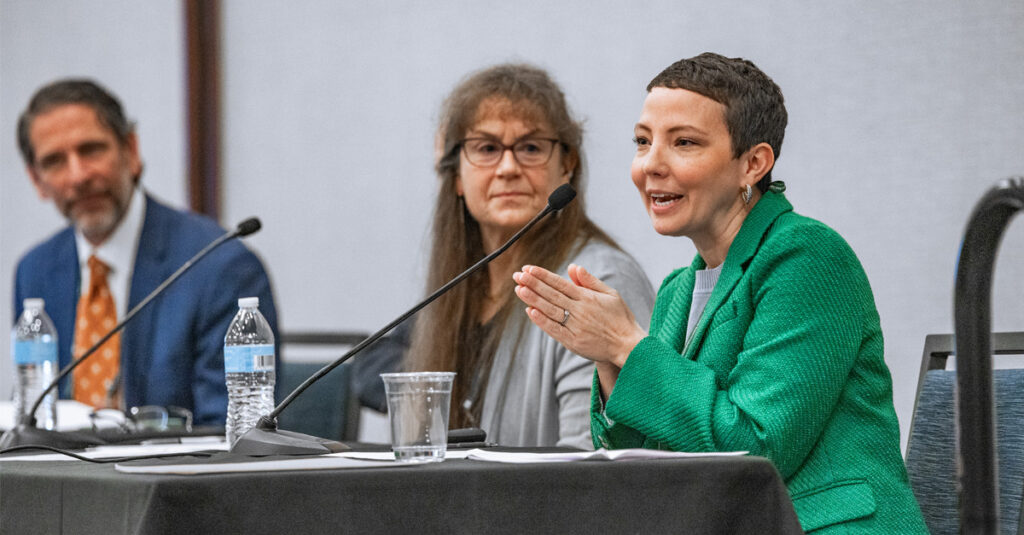
At Assumption University (MA), attention to vocation is urgent and imperative. Michael T. Matraia shared how advising relationships are an essential part of this vocational priority. Through a carefully coordinated web of supports that includes an academic advisor, alumni mentor, and career coach, Assumption asks its students to consider their gifts, including how and why they matter in the world. This institution’s work supports the conclusion that vocational conversations reduce anxiety, increase engagement, and give students the language and the confidence to navigate their post-graduate trajectories. At a time when higher education (and the world) are changing in unprecedented ways, Assumption’s model poses the question of whether the skills of human discernment will be the decisive attribute in the age of artificial intelligence. If so, are our campuses fostering similar conversations?
Diane C. LeBlanc of St. Olaf College (MN) presented on her institution’s commitment to vocational exploration in advising. St. Olaf’s approach reminds us about the importance of developing advisors to do this work and of creating definitions and clear signposts for students to follow. They affirm the lesson that many NetVUE campuses have learned: effective vocational conversations often emerge from an advisor’s own sense of vocation. As human beings learn to tell our own vocational stories, they become more adept at encouraging others to do the same. From there, clear questions go a long way towards increasing student buy-in. What does an institution mean by vocation and what questions are they asking students to answer? At St. Olaf, vocational questions build on one another each year, with students asking where they are, who they are, where they are going, and how they will get there. What are the guiding definitions and questions you are asking through your advising programs? How can you make them more visible to students?
Finally, at Franklin College (IN), as students approach their major “declaration day,” relationships and rituals play an important role in student formation. Sarah Summers shared how looking at past data on incoming students and their eventual major choices, Franklin leaders realized something important was happening in their first year. Faculty advisors teaching first-year classes were in a prime place to encourage reflection and meaning making during these formative moments. The first year culminates in a celebration of major declaration, marking an important milestone in student discernment in their first year. How are your advisors plugged into first-year experiences to facilitate these formative conversations? What rituals exist on your campus to celebrate these meaningful moments?
Navigating Vocation in an AI World
By Rachael Baker, NetVUE Associate Director
As students navigate preparing for careers in a rapidly evolving professional landscape, AI offers both opportunities and challenges for meaningful work and calling. This quarter-plenary session explored the intersection of AI and vocation in higher education and was led by Gerald D. Griffin of Hope College (MI); Caryn Riswold of Wartburg College (IA); and Gregor Thuswaldner of La Roche University (PA). The session’s guiding structure—asking the right questions, humans first, AI encounters second, and humans last—framed the interactive workshop, bringing together philosophical, ethical, and practical perspectives to help educators reflect on the vocational work they do with students.
The speakers opened the session with questions they then considered together:
- Why engage with AI at all, especially in vocational work?
- Who gains and who loses when AI is engaged?
- What is the impact on our shared humanity?
The conversations challenged participants to consider how the “rhythm of embodied presence” with students can be sustained in an AI-mediated environment. A recurring theme was the importance of maintaining human dignity and critically examining the assumptions and values underlying our use of AI. Vocational exploration is inherently relational and human centered. Student use of AI for vocational discernment asks us to examine carefully what is drawing students to AI use in this area and how everyone might need to consider, or reconsider, how to support students in vocational exploration.
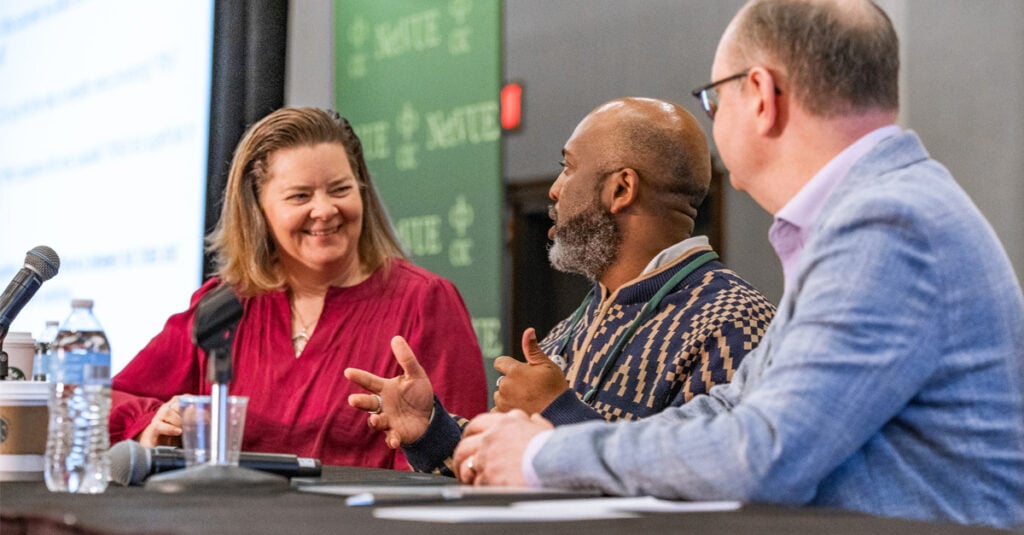
Through hands-on activities, participants then engaged with AI using carefully crafted prompts designed to engage topics of vocation with various chatbots. These included requests for curated resources, balanced analyses of AI’s risks and benefits, and Socratic questioning to prompt deeper self-examination. While AI-generated responses were often thought-provoking, participants noted that the complexity of prompts and responses might exceed students’ abilities or needs. Participants expressed the need to adapt AI use to students’ developmental levels and to remain present in embodied conversations—where nonverbal cues, real-time feedback, and space to pause and reflect are invaluable.
The session closed with a call to return to human responsibility. Speakers emphasized the need to help students ask better questions, resist the lure of instant gratification, and embrace the slow, sometimes uncomfortable process of vocational discernment. They urged educators to help students see AI as a tool—not a replacement for human relationships—and to foster curiosity and critical engagement rather than passive acceptance of AI-generated answers. The session underscored that technology can both humanize and dehumanize us. Educators should continue to explore how to guide students in navigating this tension, ensuring that technology serves to deepen, rather than diminish, our shared humanity.
The Purposeful Student-Athlete
By Rachel Pickett, NetVUE Webinar Coordinator
This quarter-plenary session was facilitated by Tim Clydesdale of the College of New Jersey and Michael B. Mitchell, both at the College of New Jersey, and Angela R. Morenz of Blackburn College (IL). Together they explored ways to support student-athletes, programs that work well to integrate vocation into this work, and how athletics is a ripe opportunity for education and vocational exploration.
Nurturing Athletes. In higher education, athletics programs are evolving beyond simple enrollment strategies to embrace a more holistic, vocation-centered approach. While athletics serves as a powerful enrollment booster, institutions must recognize that student-athletes, despite appearing well-supported, often face significant barriers to their development as whole persons. Demands on their time pull them in multiple directions, creating tension between athletics and academics. This challenge is particularly salient to many NetVUE institutions given that Division III athletes identify with this part of themselves at the same level as Division I athletes.
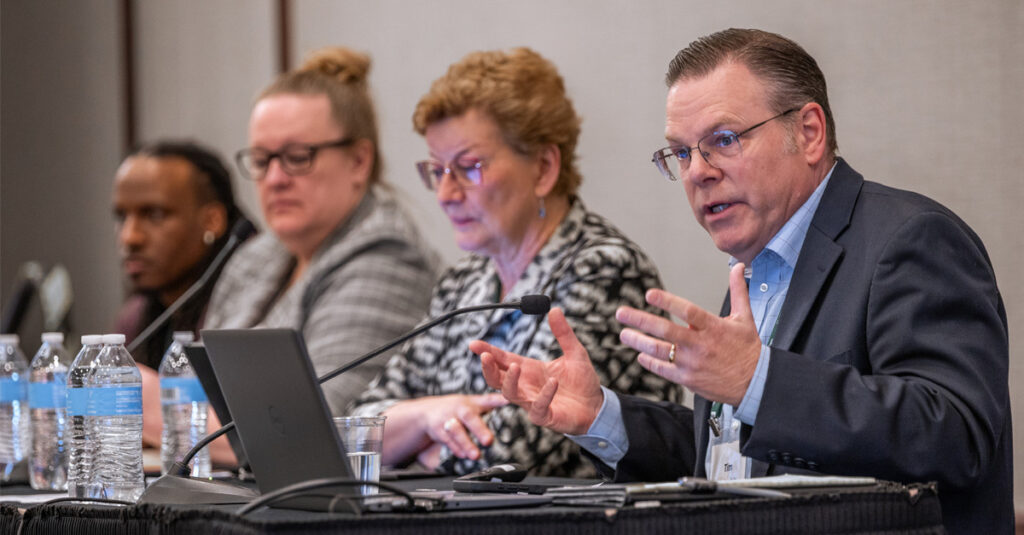
The traditional model of collegiate athletics requires fundamental reimagining. Coaches possess unique credibility and facetime with athletes that faculty members rarely achieve, positioning them as critical partners in student development. However, this influence must be leveraged intentionally to help students navigate complex identity issues and transitions, emphasizing the “student first” principle while supporting vocation exploration beyond the playing field.
Promising Interventions and Programs. Institutions are implementing diverse strategies to support the development of their athletes. Workshops addressing identity and psychological change encourage students to explore multiple dimensions of their identity—as family members, community participants, and individuals with varied gifts and interests. These sessions cover practical topics like nutrition, fitness habits for post-college life, career interviewing skills that emphasize transferable abilities, and spiritual growth. Panels of recent graduates provide valuable perspectives on life after competitive sports. Support networks prove essential for easing transitions. Mentors, counselors, and chaplains offer confidential outlets that don’t impact playing time, and they receive training in mental health awareness like recognizing suicidal ideation, depression, or anxiety. Service trips foster team community engagement with built-in reflection components, while innovative phone apps connect athletes across sports, tracking attendance at campus programming and offering opportunities for service, belonging, stress management training, and Title IX education.
Some institutions have developed structured coursework sequences—typically one-credit courses required at the 100, 200, and 300 levels. These courses focus on athletes’ vocations as students and progress from introducing institutional mission and vision through character development and ongoing support to preparing students for post-graduation identity. Taught by coaches, chaplains, and other staff, these courses maintain connection with student-athletes throughout their college careers.
Athletics as an Educational Experience. The fundamental premise underlying these efforts is that athletics constitutes an educational experience that provides valuable learning unique from academic programs. Coaches and athletic staff must approach their work as professional educators, establishing clear learning goals for athletic programs. These goals should address valuing diversity and helping athletes navigate geographic and ethnic culture differences. Moreover, student-athlete programs can support success through year-specific objectives. Examples include first-year relationship building and resource introduction, second-year purpose exploration, third-year engagement with internships, research, and study abroad, and fourth-year preparation for healthy exits, while leveraging transferable skills.
Critical to this educational framework is assessment. Post-season evaluations must matter to senior administrators, athletic directors, and coaches. Measuring whether learning goals are met, institutions can ensure that the benefits student-athletes receive, (e.g., designated study time, tutors, mental health counseling, faith experiences, and faculty-coach connections) contribute meaningfully to holistic development that extends far beyond their playing careers.
Back to Top
To report a technical problem with the website, or to offer suggestions for navigation and content issues, please contact Madeline Smanik, NetVUE communications specialist, at msmanik@cic.edu.
To report a technical problem with the website, or to offer suggestions for navigation and content issues, please contact Madeline Smanik, NetVUE communications specialist, at msmanik@cic.edu.