

By Robert Pampel
NetVUE Grant Program Officer and Director of Student Academic Affairs and Associate Dean of the College of Arts and Sciences at Washington University in St. Louis

A favorite film in my household is Ratatouille, an animated film about a rat named Remy who proves that “anyone can cook.” The film’s climax comes when a fierce critic, the appropriately named Anton Ego, visits the restaurant where Remy has taken up residence as a chef. Ego expects to deliver a scathing review of a restaurant he has long considered a culinary embarrassment—something that seems all but guaranteed when Remy serves the “peasant dish” ratatouille. But the humble fare has a transformative effect on Ego. The moment he tastes the dish it transports him back to his own modest roots as a child in the countryside, when his mother would prepare it as comfort food for him. It evokes feelings of home, love, and security. He is stunned at first, then enjoys the dish with childlike enthusiasm.
I had just watched the movie with my two young children when I led an advising workshop using NetVUE’s conversation cards. As my colleagues and I discussed how these thoughtfully crafted cards might be used in various advising situations, someone highlighted a card from the Engage deck that posed the following questions: “What communities have you left behind or feel no longer a part of? What did you lose and what did you gain by leaving?” When I heard those questions, the sensation was something like Ego’s out-of-body experience of being taken back to his childhood. I was reminded of the community in which I was raised, which shaped me in myriad ways that I cannot enumerate here, but which I had largely forgotten (or haven’t fully appreciated) since I left nearly a quarter-century ago.
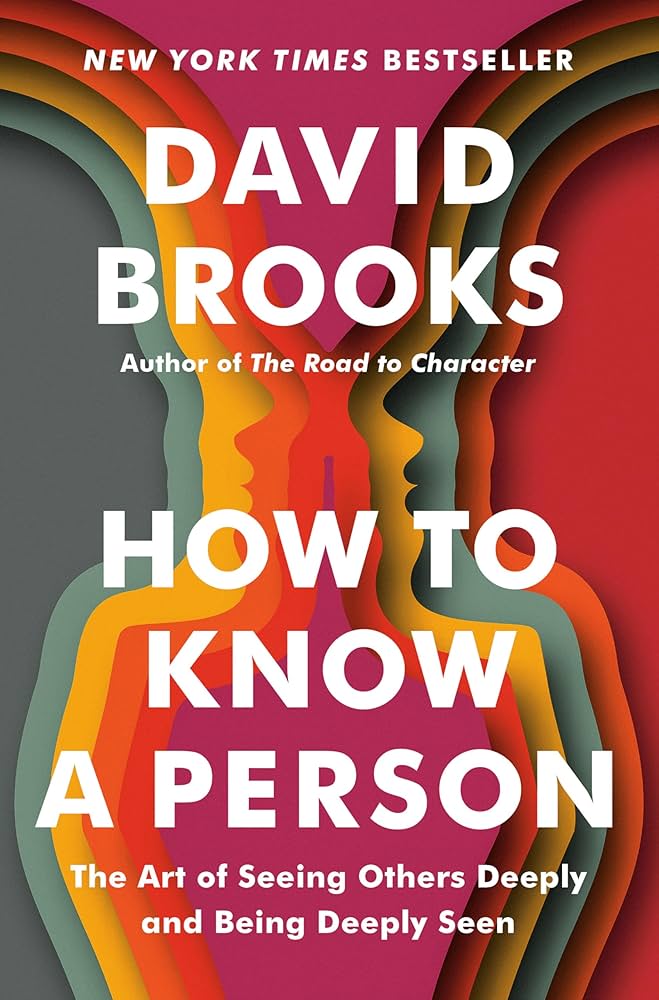
The experience has me thinking about the power of a good question. In How to Know a Person, David Brooks characterizes questioning as a “moral practice” that requires a “posture of humility” and is a form of “honoring a person.” When people are asked a thoughtful question, it might draw out a story, perhaps something they might never have shared or have never fully been able to articulate. For me—perhaps because I just celebrated a milestone birthday that now places me squarely in middle age—this question about communities transported me to another time and place that left me feeling quite pensive about who I’d become since leaving home.
I’m grateful for these questions and am already hoping to encourage the same kind of reflective posture in my children. Every now and then around the dinner table, my son will pull out a deck of cards called Talking Points, which I’d characterize as NetVUE conversation cards for kids. The idea is that parents pose questions about school, home, personal well-being, the future, and fun. Both of my children answer enthusiastically and disclose their feelings about school and relationships, their perceptions of my (and my wife’s) work, and what they value about our home. It’s a reminder to me that I can learn a lot from my children—both in the stories they watch and the stories they tell.

To report a technical problem with the website, or to offer suggestions for navigation and content issues, please contact Alex Stephenson, NetVUE communications coordinator, at astephenson@cic.edu.