



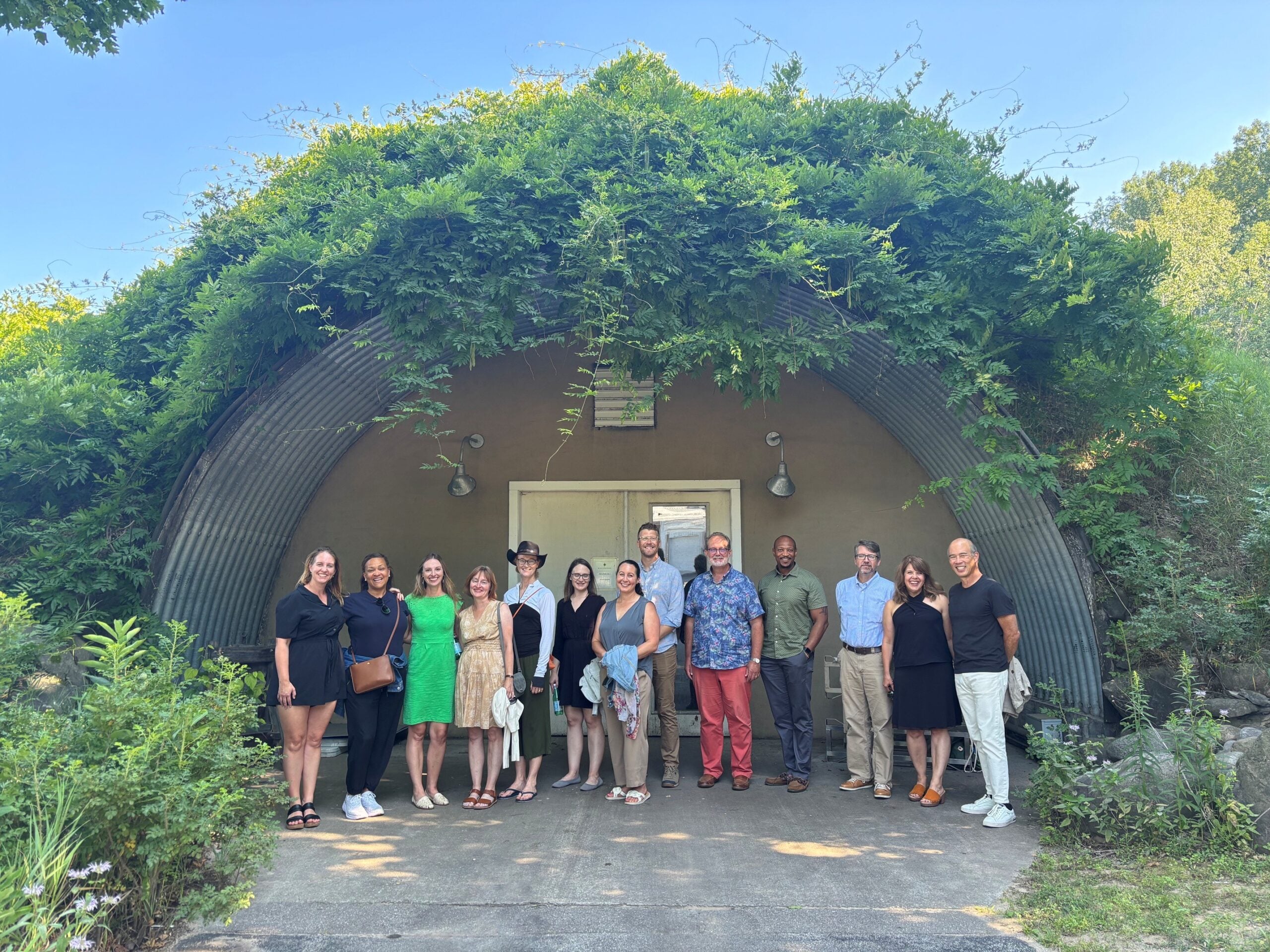
Educating for vocation offers colleges and universities a pathway for navigating uncertainty and contemporary challenges. As these institutions prepare students for the future, reflecting on questions of meaning and purpose can help them build resilience and imagine new and different ways of thinking, doing, and being. This volume argues that vocation cultivates courage and hope. Teaching vocational exploration for career and life readiness invites students to navigate the unknown while imagining possibilities for the future.
Scholars in this seminar considered how we can live in the now and not-yet aspects of our callings. How are we called to respond to loneliness and despair so as to bring forward hope for the future? How can we foster courage and resilience to imagine a world that allows all to not only survive, but thrive? How can we courageously face the crises that threaten our ecologies of the natural world, human relationships, and civic life? This seminar emphasized the ways we can cultivate a vocational imagination that invites students to build resilience and courage for purpose-filled lives. The scholars explored practices that can be applied by educators and leaders across the university in individual, communal, and institutional settings. As they considered the relationship between action, hope, and the future, they explored how to prepare students for career and life readiness as they navigate uncertainty.
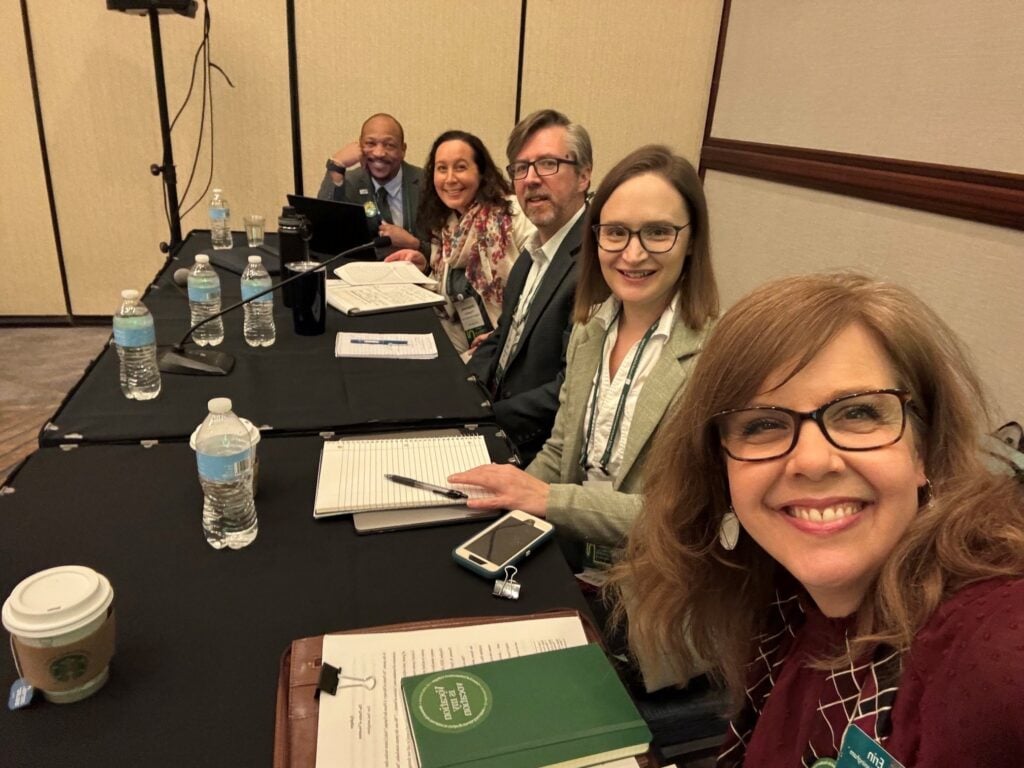
Collectively, the authors enrich and expand a sense of calling to prioritize relationship-building as well as institutional and structural change. The contributing scholars explore vocation through innovative approaches to pedagogy, mentoring, leadership, and community engagement. Their chapters argue that educators across the academy must cultivate moral courage as we accompany students in approaching challenging realities. This involves orienting vocation toward political engagement, resisting injustice, navigating emerging technologies, and responding to environmental threats; it also involves prioritizing deep listening, observation, and interconnectedness as part of discernment.
The NetVUE Scholarly Resources Seminar on vocation and the future—fifth in a sequence of seminars—began by positioning vocational discernment in conversation with innovation, crises, and change. Across the volume, readers will find practices for vocational reflection that help connect current callings to future purpose. The chapters illustrate how vocational hope and imagination can prompt a renewed and even new calling for individuals and institutions. The authors meaningfully consider challenges across the academy while offering grounded and creative examples of people exploring professional and personal purpose. In so doing, the contributors invite educators and students to learn to love the future.
The work of this seminar will be disseminated in many forms, first through the volume Vocation, Higher Education, and the Future: Imagining Possibilities, Cultivating Practices, forthcoming from Oxford University Press in early 2027. We hope that seminar members will also contribute resources to use across campuses by administrators, faculty, staff, and students to foster discussions about the ways educators across the academy can cultivate hope for the future by educating for vocation.
Vocation, Higher Education, and the Future: Scholars
Stephenie R. Chaudoir – Associate Professor of Psychology, College of the Holy Cross (MA)
Andy Chan – Vice President, Office of Personal and Career Development, Wake Forest University (NC)
Mari Elise Ewing – Professor of Environmental Studies, Austin College (TX)
Julia Lambert Fogg – Professor of Religion, California Lutheran University
Courtney Kealy – Associate Professor of Religious Studies, Wofford College (SC)
Justin Klassen – Professor of Theology, Bellarmine University (KY)
Lauren Kuykendall – Associate Professor of Industrial-Organizational Psychology, George Mason University (VA)
Richard J. Meagher – Professor of Political Science and Director of Social Entrepreneurship, Randolph-Macon College (VA)
Aron Reppmann – Professor of Philosophy, Trinity Christian College (IL)
Richard Sévère – Dean, College of Humanities, Education and Social Sciences, Purdue University Northwest (IN)
Brandi D. Simpson – Assistant Professor of History and Assistant Director of the Center for Social and Racial Equity, Wesleyan College (GA)
Erin VanLaningham (volume editor) – Professor of English, Loras College (IA)
Meghan K. Winchell – Associate Provost of Integrative and Experiential Learning and Professor of History, Nebraska Wesleyan University
Contact Information
For additional information about the NetVUE Scholarly Resources Project, please contact Erin VanLaningham, the project’s director, by email at evanlaningham@cic.edu or by phone at (563) 588-7200.
To report a technical problem with the website, or to offer suggestions for navigation and content issues, please contact Madeline Smanik, NetVUE communications specialist, at msmanik@cic.edu.