


By Melissa Pavlik
Writing Center Director and Professor of English at North Park University, and Adjunct Lecturer in Lewis University’s Prison Education Program
The newsletter Feather Bricks was started during the pandemic so that professors who taught within Lewis University’s prison education program could stay in touch with students in maximum-security prison who were seeking an MA in restorative justice ministries. Contributor Damen Price came up with the title, which, he explains in the first issue, “is in harmony with Galatians 6:2” and means that the bricks we carry can become as light as feathers when we work through our burdens together. Six years and 29 issues later, I received a NetVUE Grant to Individuals for Vocational Exploration, which allowed me to reflect on this work. As a result, I published a Feather Bricks anthology that celebrates undergraduate work on the theme “vocation.” As a writing center director who teaches college courses in Illinois prisons, I have come to learn how to see my students—from being seen by them. As I connected my work and co-collaborators across prison classrooms and free-world campuses, I have experienced a heightened sense of calling because of the power of “reciprocal visibility.”
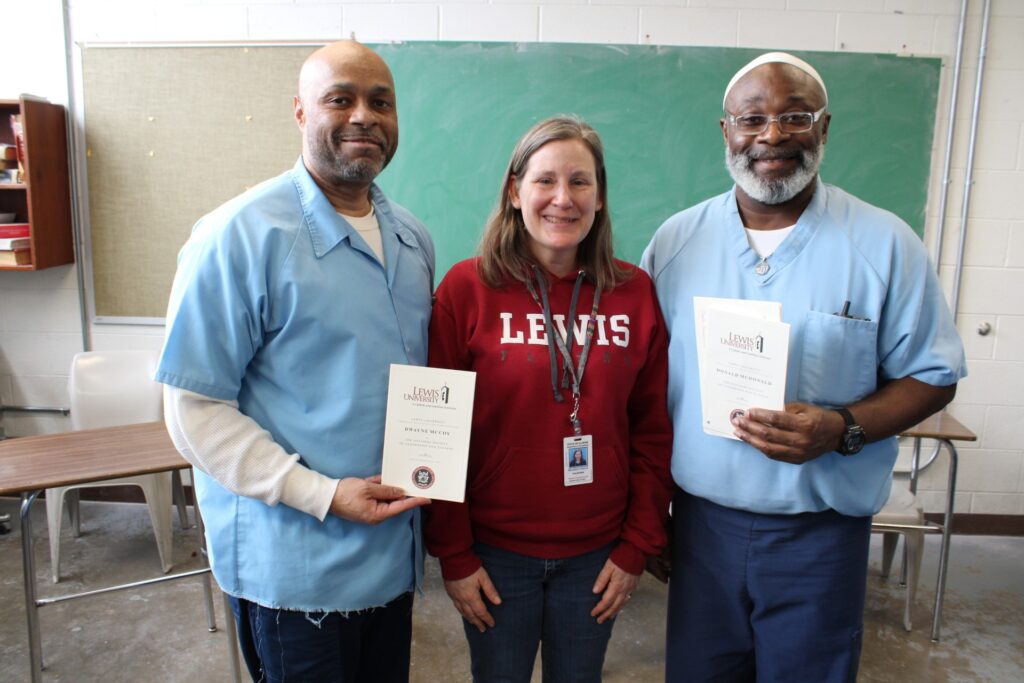
At the end of the grant period, we celebrated with a Feather Bricks release party in our final class at Sheridan prison. René, an anthology contributor, signed up for the inside class open mic. The week before the party, he prepped us for his reading: “I want to share about the dictionary, liberal arts, and slavery.” The day of the “party,” René hefted in an unabridged Webster’s the size of a baby. Cradling his charge in a forearm, he flipped the pages to a section heavily marked, then read, “Liberal arts: the arts … open to study by free men.” René recalled how he had asked the previous week if our prison degree program was an extension of a “liberal arts university.” Learning it was, he turned to the dictionary to understand what that meant. The definition led René to more questions than answers, including “How many of us [here in prison] realize that we are slaves?”
The silence in the room (so seldom, if ever, a thing) was the response itself. Providing an example, René said, “Trade-school classes teach you how to be a real good slave.” He continued, “If liberal arts education is only open to free men, then who is this Professor Pavlik? Who is this person who says she’s scared to get on the highway, yet drives through two tornado warnings this summer for class with us?”
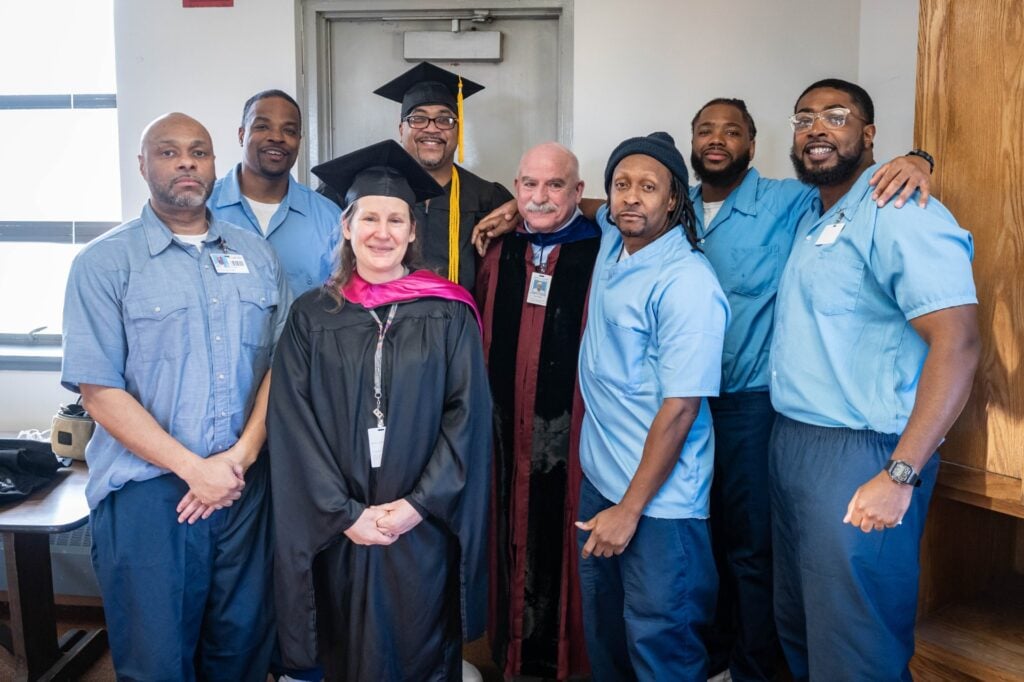
I did not respond that day (other than prepping to deflect his question with the phrase common to our hypermasculine class body: “Who cut the onion?”) because René’s comments exposed me to a point of shock. Feeling seen in the fullness of my humanity prompted me to experience a moment of reciprocal visibility. It allowed me to acknowledge the fact that my students had taught me—with their ability to see me in this prison classroom—how to see them. The feeling reminded me of the first time I facilitated writing conferences in a prison, some nine years ago. The students had demonstrated such genuine interest in me that I reacted in kind. Reciprocal visibility led me back to teaching credit-bearing writing classes to those students who eventually graduated and then worked with me to run a writing center in prison. I returned to co-teach with those graduates who, making use of their advanced degrees as adjunct instructors, became my best colleagues. Before we discussed the content of our lessons, they always put me, the person, first.
From these experiences, I have learned that being seen in a prison classroom has the unique potential to generate reciprocity. My students showed me the value of habitually practicing intentional acts: driving to see them despite inclement weather, calling them by their chosen names instead of state numbers, and engaging with them as the tutors, professors, and writers they are. These acts reciprocate the same way my students have been seeing me in my full humanity. I invite you to reflect on how your sense of vocation might be informed by such moments of reciprocal visibility.
To report a technical problem with the website, or to offer suggestions for navigation and content issues, please contact Madeline Smanik, NetVUE communications specialist, at msmanik@cic.edu.