



NetVUE Opportunities
The Call of Hospitality and Creativity: Reflections on the 2026 Scriptural Reasoning Hubs
By Nicholas Adams, NetVUE Scriptural Reasoning Specialist
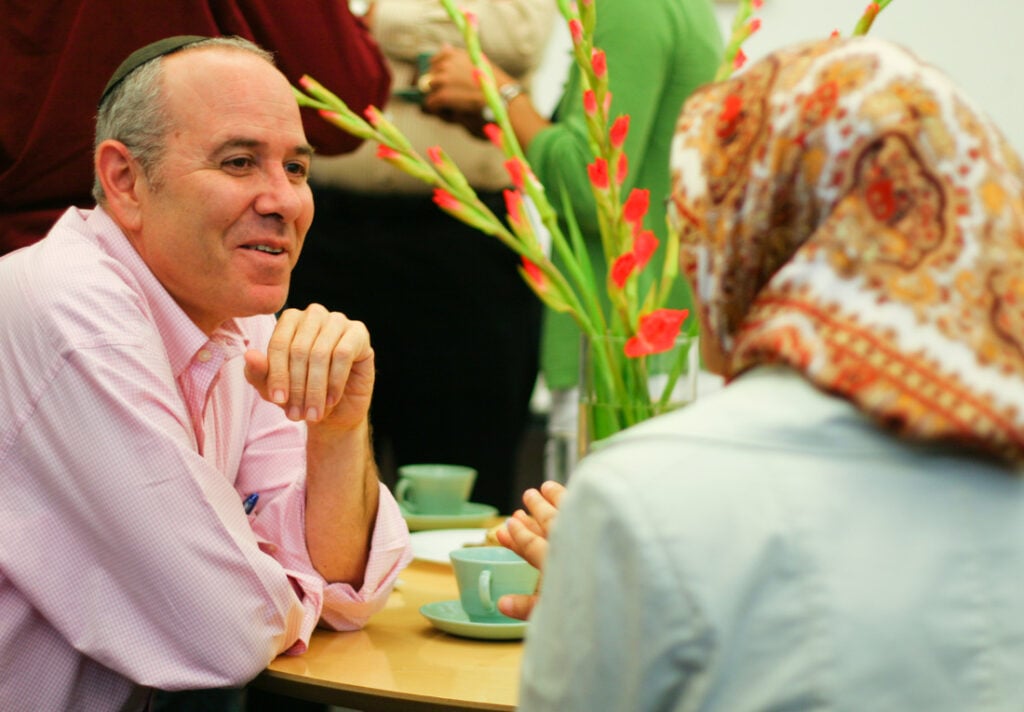
In May and June of this year, NetVUE convened four Scriptural Reasoning hubs to support and prepare staff and faculty members at NetVUE institutions to use the study of sacred texts to enhance their students’ vocational exploration. This year’s themes focused on hospitality and creativity, with the aim of providing opportunities for students to consider how their own traditions’ practices of welcoming strangers and expanding the imagination might contribute to what they have to offer as they discern their professional callings. The goal of the hubs was to inspire a renewed commitment to vocational exploration in the context of negotiating difference in community. Participants left the experience with a set of practical skills to navigate such conversations with dignity and grace.
These hubs were hosted by Campbell University (NC), Butler University (IN), St. Edward’s University (TX), and Pacific Lutheran University (WA). Participants from 26 member institutions and 14 states met to engage in vocational exploration through the study of sacred texts across traditions.
The core practice is small group study, typically at tables of six to eight participants, around carefully chosen texts grouped around this year’s themes. The agenda extended and deepened the pattern developed in the 2025 hubs with a focus on practical skills, engaging participants across the whole institution, serving multiple constituencies, and meeting several needs simultaneously. Groups tackled questions relating to how to foster closer collaboration between faculty members and staff, serve first generation students, and recognize the important work often done invisibly or under difficult local circumstances.
The crucial link that these hubs reinforce—and the most innovative aspect of NetVUE’s engagement with Scriptural Reasoning—is between the study of sacred texts and students’ vocational reflection. Participants affirmed that their students’ sense of their own callings and their capacity to serve in a variety of professional roles is intimately linked with their ability to navigate different religious traditions, see things from others’ perspectives (especially if those perspectives are unfamiliar and even apparently unattractive), and develop fluency across different cultures. The hubs made developing these skills a practical priority; they also provide opportunities for surprising new engagements. One of NetVUE’s core strengths is the diversity of its many member institutions from across the country and its ability to gather colleagues from these institutions for meaningful discussion. The Scriptural Reasoning hubs benefit from and embrace this model in ways that enrich these connections.
It is not only vocational exploration that requires attention to particulars and the capacity to notice crucial details that often pass unremarked. Such discipline is also foundational across the hard sciences, social sciences, and humanities. Building confidence in reading carefully, especially reading unfamiliar (or overly familiar) material, is a core competence across the disciplines: the specific intellectual virtues of Scriptural Reasoning thus serve a pan-institutional set of interests in ways that can be tailored to individual local needs. This benefit is particularly important as institutions grapple with the imperative—familiar to many NetVUE member institutions—to “do more with less.”
Several additional themes emerged: fostering the right kinds of curiosity, learning to handle uncertainty with maturity, and paying attention to details. Participants realized that cultivating these dispositions requires sufficient time (and the right pace), as well as the ability to connect institutions across religious affiliations, especially as they might not reflect religious diversity internally. NetVUE enables different kinds of institutions, with different student constituencies, to combine and complement each other through a generative process. The practice of Scriptural Reasoning, aided by a large and growing body of reflections, enables these opportunities to multiply in interesting and fruitfully unpredictable ways.
As this year’s hubs concluded, participants were called to see and be reminded of the capacity and calling of young people to sustain practices of attention, hospitality, and uncertainty—even in a world of cynically manipulated polarization and manufactured outrage. Our students and their traditions have deep wells of patience, adaptability, and hope. NetVUE’s Scriptural Reasoning hubs draw water from these ancient wells, dig new ones, and discover new possibilities for the distribution of these waters to those who thirst.

To report a technical problem with the website, or to offer suggestions for navigation and content issues, please contact Madeline Smanik, NetVUE communications specialist, at msmanik@cic.edu.