


Campus Spotlight
Otterbein University: Going “All-In” on Vocational Exploration
By Daniel Meyers, NetVUE Online Network Coordinator
What would vocational exploration look like on a campus if it were not presented as a series of optional programs, but instead built into graduation requirements? A menu of programs or course offerings for vocational exploration remains common across many institutions, but what if vocational opportunities were identified as so integral to the mission of an institution that every student was required to complete them? Few institutions have taken this route, but Otterbein University in Westerville, Ohio, identified several important building blocks that led to “Otterbein READY”—a distinctive approach that seeks to create this kind of integration.


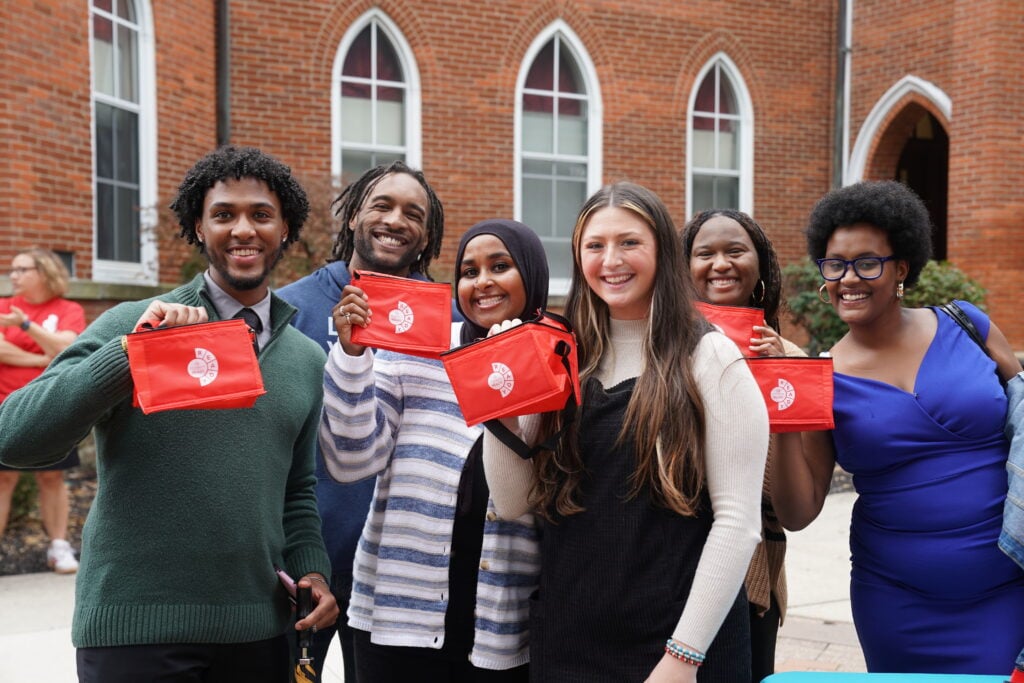
Otterbein READY is a framework that connects existing programs and culminates in a new full day, all-campus event that is required for all students. Otterbein leadership packaged existing high-impact practices into this vocationally-inflected academic experience, creating four personal and professional goals aligned with Otterbein’s mission. These emphasize the importance of self-reflection, connecting to others, encountering new experiences, and preparing for the future. Suzanne Ashworth, professor of English and co-director of first-year experience and senior-year experience, understands these goals as a way of enacting the institution’s mission, in order to “help us rearticulate and re-express our mission in vocational terms.” To turn these ideas into an actual student experience, the READY program includes four requirements that span the Otterbein education. Courses offered through the institution’s first-year experience and senior-year experience bookend the requirements; between these courses, students must complete an immersive experience selected from a variety of high-impact practices like study abroad, internships, or research opportunities. The fourth requirement is participating in the annual READY Day, when classes are canceled, and all students attend a full day of professional development exploration specific to their year at the university.
“Otterbein READY is a promise that we make to each and every student,” said Ashworth. “We will together meet them where they are. We will journey with students as they figure out who they are, what they want, and what matters to them,” Ashworth noted, describing the overall goal as a “commitment to helping our students meet the needs of a complex world.”
To move from distinct voluntary programs to a more fully scaffolded requirement, Otterbein’s first building block was experimenting with programming already in place. In 2011, the university had started to use peer mentors as part of its first-year experience. While this model had a rich potential for encouraging students to support one another, the outcomes were very mixed. Otterbein shifted to a staff mentoring model, which allowed staff to develop unique partnerships in the classroom. Staff members were equipped with vocational language, materials, and strategies as part of their mentoring role. Assistant Provost Kate Lehman noted the “nimble” quality of staff advisor content, allowing vocational reflection to shift and adapt as needed. Over the years, Lehman and others saw the benefit of an ever-evolving, hands-on mentoring program for first-year students. This work helped prompt leaders to think about how other parts of campus could benefit from this kind of vocational reflection.
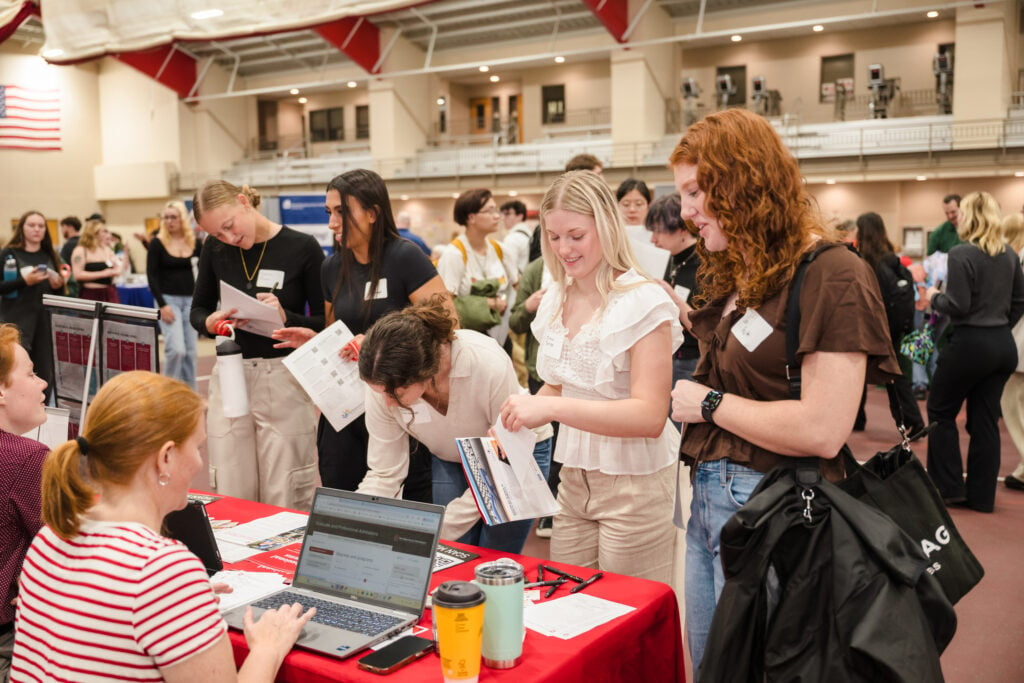
The second building block was identifying the barriers that students face in engaging in vocational exploration and dreaming big. Different departments tried a variety of large-scale events that focused on professional readiness and vocational exploration. These programs were often half-day events or evening programs that showcased different majors or career opportunities. Students who attended benefited greatly, but the programs struggled to draw consistent attendance. “There were always other obligations and always something preventing students from getting the full benefit,” reflected Colette Masterson, associate director of experiential learning, student success and career development. This challenge will resonate with anyone who works with college students; readers might also appreciate the question that Masterson and her colleagues posed: “What would happen if this program were required of all students?” As Masterson and her colleagues answered this question, Otterbein leadership began to explore a process in which an entire day of instruction would be dedicated to Otterbein READY.
The third building block was using a simultaneous grassroots and top-down approach to institutional change. To move forward on their plans for READY Day, campus leaders pursued a governance process that included student constituents as well as the board of trustees, and many others in between. During the committee process, Wendy Sherman Heckler, provost and senior vice president, recalled that students were asked to vote on the decision to dedicate a day of instruction for READY Day. Students actually delayed the vote because some of their peers wanted more time for thoughtful consideration. “Students came together,” said Sherman Heckler, “they supported one of the calendar options, which became the majority opinion, and it went to the university senate.” The vote there followed suit, influenced by student testimony, which emphasized that many students could not attend a career conference or professional development experience unless space was created for them to do so.
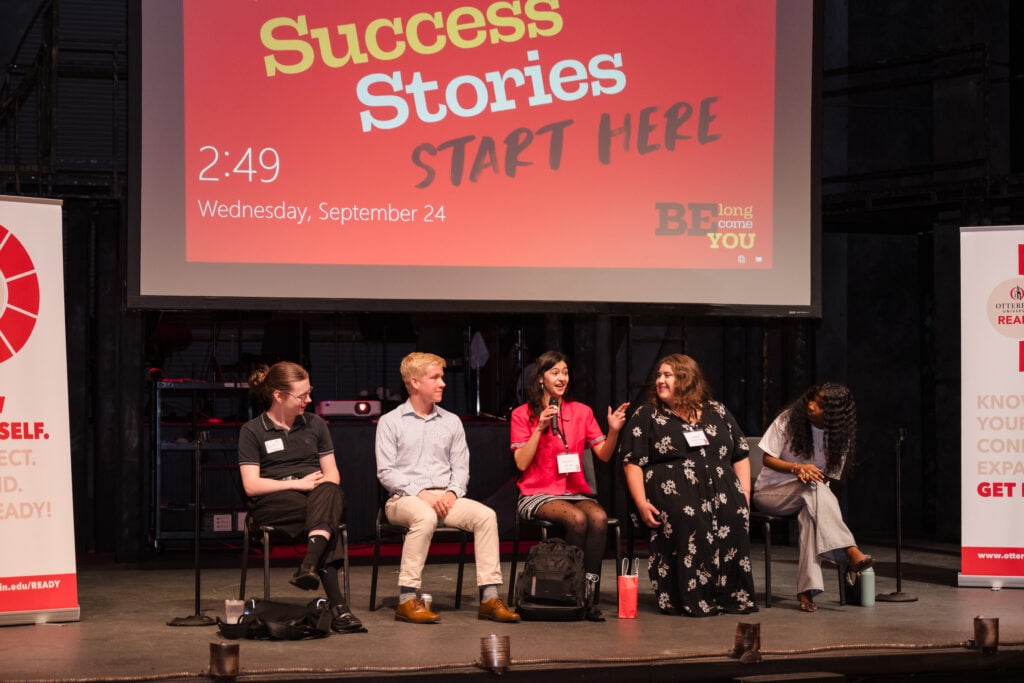
Repurposing a single day of instruction might seem like a mere calendar adjustment, but it had significant repercussions. The first and last day of the semester had to shift, creating a ripple effect on every syllabus and event calendar across the institution. To require something of everyone necessitates new policies, shifts in budgets, and curricular change. Ashworth acknowledged that “change fatigue” occurred, but this decision was also “prophetic”—positioning Otterbein to lead higher education in a new direction. “Our leadership just took a stand,” said Ashworth, “convincing the campus that we had to do this to center our institutional mission in a significant way, and to help our students meet the world they enter into.”
This decision led to a massive “conference-style experience” for all 2,200 Otterbein students, consisting of four different tracks so that students in each class will have a different experience each year. The inaugural event occurred in September 2025, coinciding with homecoming and the fall meeting of the board of trustees. The event brought 125 graduate schools and hiring industry partners to campus; it included various pathways for students to build skills, to prepare for their careers, and to network. It also required providing food for 3,000 people! How did Otterbein colleagues pull this off? Sherman Heckler explained that cabinet-level leadership expected all offices and all staff to support the initiative: “colleagues parked cars, served food, ushered guests.”
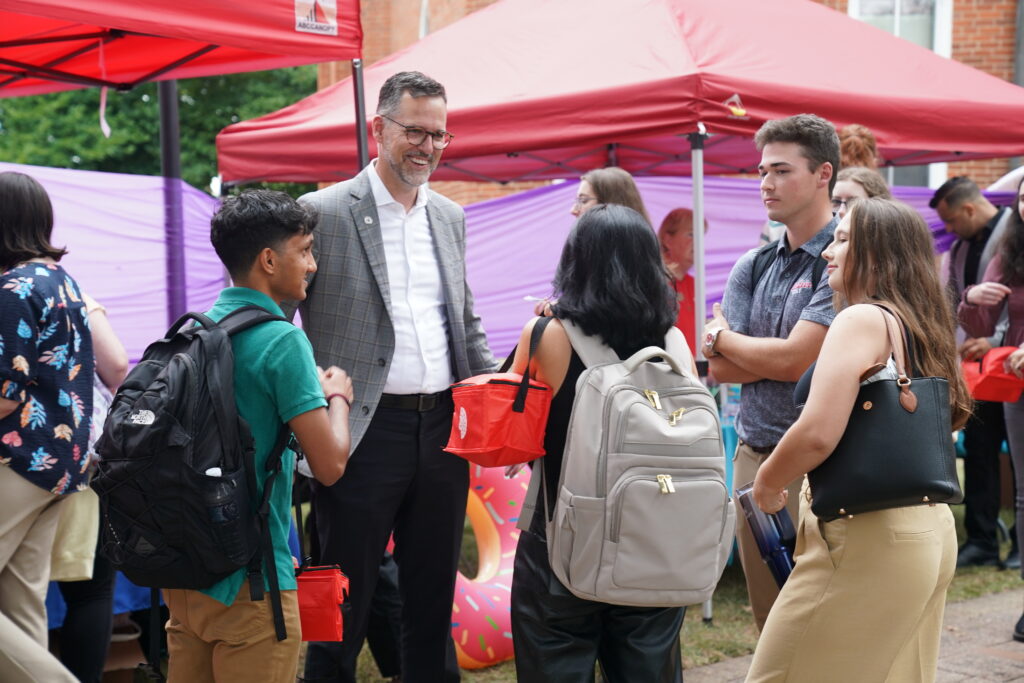
The program as a whole ensures that Otterbein students not only encounter vocational reflection throughout their coursework; they also engage in high-impact practices with autonomy and participate annually in this campuswide day of exploration. This allows every part of the university to contribute to (and to celebrate) vocational exploration as a defining throughline of the education that Otterbein offers. “READY Day is unprecedented,” said Ashworth, “because it cannot be siloed; there is a ‘wow’ of such communal connection and energy—everyone is all-in!”
Like any effort to build something from a combination of existing and brand-new elements, the design of this program required enormous creativity, change, and learning through each step. The process successfully engaged students, faculty members, staff, presidential and cabinet leadership, the board of trustees, and Otterbein graduates. With buy-in across the campus, each of these constituents contributed to the plan.
Not all institutions will view a four-part graduation requirement as the right path for vocational reflection. But for any colleagues who have imagined this kind of architecture, and then cast it aside as “unrealistic,” perhaps Otterbein’s story provides an outline of how a transformative vision can be brought to life when it is anchored in an institution’s mission. It also demonstrates how an institution can make use of programming already in place, can work simultaneously from the ground up and the top down, and can take incremental steps toward an outcome in which everyone on campus can become “all-in” on vocational exploration.

To report a technical problem with the website, or to offer suggestions for navigation and content issues, please contact Madeline Smanik, NetVUE communications specialist, at msmanik@cic.edu.